NDIS misconceptions: what you can actually access in Southbank

According to data from the Australian Institute of Health and Welfare, around one in six (18 per cent) of people in Australia live with a disability. This means that out of the total population, approximately 4.4 million Australians have a disability.
Currently, the government’s National Disability Insurance Scheme (NDIS) is helping over 700,000 people living with a disability across Australia. NDIS provides funding for people with disabilities to live more independently and participate in their communities.
Although NDIS is an Australia-wide scheme, services covered by NDIS can vary depending on the state and region. For example, Roaming Therapy is a provider that supports NDIS participants, and offers its services in Melbourne and Adelaide.
If you’re eligible for NDIS and you’re wondering what kind of services are available in Southbank, this article is for you. It also delves into common NDIS misconceptions, so you can better understand the government program.
Understanding NDIS
The NDIS, short for the National Disability Insurance Scheme, provides funding to eligible people with disability. The goal of the scheme is to give people funding so they can have:
- More time with friends and family
- Greater independence
- Access to new skills
- An improved quality of life
- Better job opportunities
The NDIS also helps people with a disability connect with local community services and providers. A few examples of services that NDIS may cover include:
- Accommodation assistance
- Assistance animals
- Assistance to access and maintain employment or higher education
- Household tasks (e.g., cooking and cleaning)
- Travel and/or transport arrangements
- Home modification design and construction
- Personal mobility equipment
- Behavioural support and/or therapy
NDIS can fund services, items, and equipment that are related to the person’s disability. For a full list of the services covered, more information is available on the NDIS official website.
Who the scheme is for
NDIS is available for people aged 9 to 65 who have a disability caused by a permanent impairment. This impairment can be intellectual, cognitive, neurological, sensory, physical, or psychosocial. A few examples include:
- Autism
- An intellectual disability
- Permanent blindness
- A spinal cord or brain injury
- Cerebral palsy
- Genetic conditions, such as: Angelman syndrome, Cri du Chat syndrome and Leigh syndrome

How to apply
If you are unsure if you are an eligible candidate for NDIS, you can go through the official online checklist to determine suitability. If you are eligible, you can:
- Contact your local NDIS office or local NDIS partner and ask them about applying for the scheme.
- Phone NDIS on 1800 800 110 to be supported in applying to the NDIS.
Dispelling common myths
Navigating NDIS can be confusing at the best of times. There is so much information to absorb and misinformation floating around on the internet, which is why we’ve outlined several NDIS myths and misconceptions, clarifying them.
Myth 1: You can’t have NDIS if you have a job
This simply isn’t true. The NDIS provides help to all people with disabilities, regardless of their financial situation. How much money you earn or own is not required when applying for NDIS support and does not affect the amount of funding you receive.
Myth 2: NDIS doesn’t cover respite care
Despite common belief, the NDIS does cover respite care. The misconception that the NDIS doesn’t may be because it isn’t outright listed as “respite”. It is referred to as Supports for Sustaining Informal Supports in official documentation.
Myth 3: You can’t change providers
This myth is definitely not true. A person always has the right and ability to change providers, even after they’ve received support from them. If you’re not satisfied with your current NDIS provider(s), you always have the option to change.
Myth 4: Funding is based on the type of disability
A common piece of misinformation spread about NDIS is that the only factor considered when determining the funding an individual receives is their type of disability; this is untrue. The type of impairment is one of many factors considered.
For example, another factor taken into account includes the pre-existing informal assistance a person receives from their friends and family.
Myth 5: NDIS will replace your Disability Support Pension
There is no relationship between the Disability Support Pension (DSP) and the NDIS. They are managed by different services. The DSP is handled and paid by Centrelink, whilst a person’s NDIS plan is paid by an agency called the NDIA.
A person can receive NDIS and a DSP, and the two won’t impact each other. NDIS is designed to help people pay for disability support they need to live, whereas DSP is designed to help people with their day-to-day living costs.

Myth 6: The funding goes directly to the person’s bank account
Money from an NDIS plan doesn’t always go directly into a person’s bank account. Receiving funds depends on how the individual has chosen to manage their NDIS plan with their planner.
The organisation that manages and controls funding for NDIS is extremely strict. Funds received can only be used in the ways outlined in an NDIS plan. So, if a person does receive funding straight to their bank account, the money must be used for the pre-planned service(s) or item(s).
Myth 7: NDIS is only for physical disabilities
Despite popular belief, the NDIS can cover more than just physical disabilities. The disabilities also don’t need to be ‘visible’ to others. While one of the basic criteria for receiving NDIS funding is that the disability be permanent, it can also be:
- Physical
- Intellectual
- Cognitive
- Neurological
- Sensory
- Psychosocial
Navigating NDIS in Southbank
As Southbank is an inner-city suburb in Melbourne, there is a large range of options for NDIS services compared to rural or remote areas of Victoria. Public transport in the area is also great, so it’s easy to access NDIS services in the surrounding suburbs.
If you live in or near Southbank and you’re looking to apply for NDIS, the closest offices and local area coordinators (LAC) are:
- LAC: 40 Burwood Rd, Hawthorn 3122 VIC
- LAC: 27 - 35 Byron St, Footscray 3011 VIC
- NDIS: Level 7. 641 Mt Alexander Rd, Moonee Ponds 3039 VIC
If you’re looking to apply for NDIS for a child and/or receive early childhood support, the following are the closest areas:
- Early Childhood partner: 27-35 Byron St, Footscray 3011 VIC
- Early Childhood partner: 12-14 Glenferrie Rd, Malvern 3144 VIC
If you’re unable to visit a centre in person or are uncomfortable about in-person meetings, you can call 1800 800 110 for support to apply for NDIS over the phone.
If you’re interested in allied therapy services in areas of Melbourne, such as Southbank, or Adelaide, it’s worth looking at dedicated care services like Roaming Therapy. They’re is an array of mobile NDIS providers that can provide the care you need, depending on your area, and can come straight to your door.
Related Articles
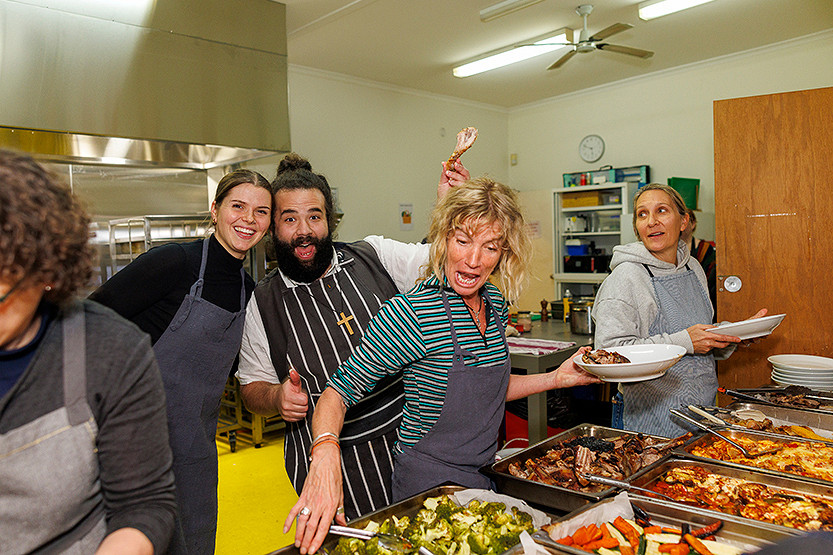
Dorcas St meal brings community together in South Melbourne
At around 6.30pm on a wintry Thursday a few dozen people are tucking into a three-course meal at the Uniting Church Hall in Dorcas St, South Melbourne.
Read More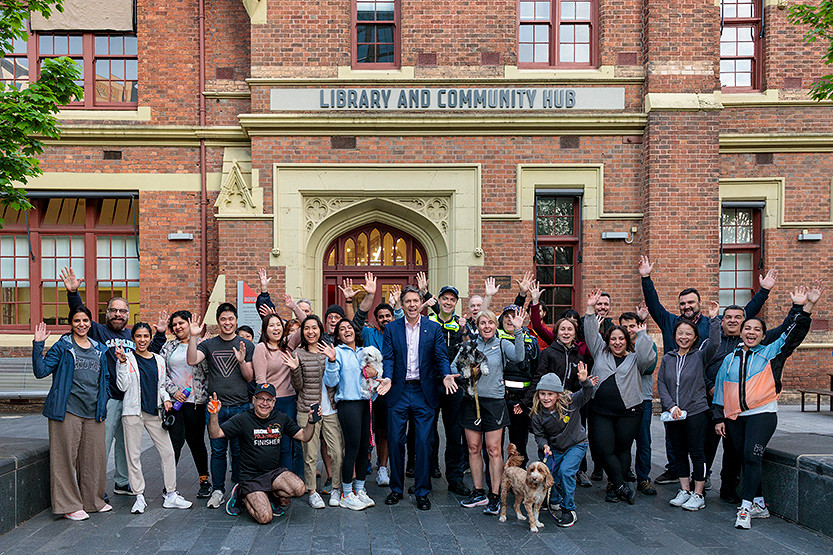
Southbank Evening Walking Group steps out for safety and connection
What began as a small fitness idea among neighbours has quickly grown into one of Southbank’s most positive community movements.
Read More
Southbank bookshop hosts local conversation on body image
Mary Martin Bookshop at Southgate will play host to an important community discussion on body image this September, as Australian author Chi Chi Wang brings her story and message of self-acceptance to Southbank.
Read More
Australia 108 rooftop stunt sparks safety questions

Dorcas St meal brings community together in South Melbourne
 Download the Latest Edition