A neighbourhood for people: Why Southbank’s streets need an urgent rethink
Southbank has transformed dramatically over the past two decades. Once an industrial fringe of the CBD, it is now one of Australia’s most densely populated urban neighbourhoods – home to thousands of residents, workers, students and visitors.
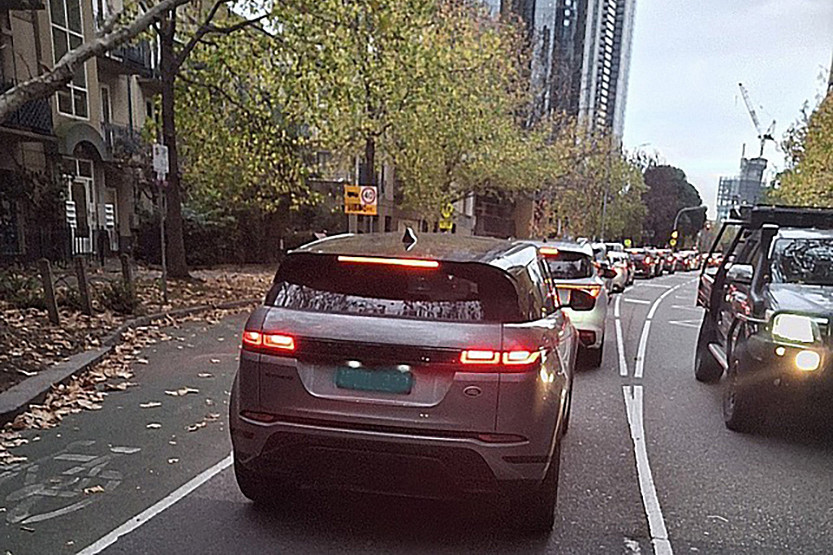
Yet despite this evolution, much of Southbank’s street infrastructure still reflects an outdated philosophy: moving as many cars as possible, as quickly as possible. The result is a public realm that too often fails the people who actually live here.
Across Southbank – particularly on local streets that are not major state highways – pedestrians and cyclists remain secondary considerations.
Several locations highlight the problem.
The stretch of City Rd between the St Kilda Rd underpass and Power St has become a daily “gauntlet” for pedestrians and cyclists. Heavy traffic volumes and speeding vehicles make crossings uncomfortable and potentially dangerous. Residents regularly report vehicles ignoring pedestrian signals near City Rd and Fanning St.
Southbank Boulevard, despite its attractive landscaping upgrades, continues to suffer from very poor signal coordination. Pedestrians often wait unnecessarily long periods while traffic lights cycle for little or no vehicle traffic – what many residents describe as “ghost traffic”. These delays often encourage risky behaviour by both pedestrians and drivers and undermine the goal of creating a people-friendly boulevard.
Several streets such as Kavanagh St and Fanning St are used increasingly as rat-runs by through traffic. With the ongoing redevelopment of the Arts Centre precinct and the future NGV Contemporary project, pressure on these streets is likely to increase further. Residential streets should not function as high-speed shortcuts. Reduced speed limits, traffic calming and safer pedestrian crossings are urgently needed.
Cycling infrastructure remains another weak point. While some improvements have been made, Southbank’s bike network is still fragmented and inconsistent. Protected lanes often end abruptly, and cyclists frequently lose priority at intersections and crossings. In a high-density inner-city neighbourhood, safe and continuous cycling routes should be considered essential infrastructure, not an afterthought.
The intersection of Power St and Kavanagh St is perhaps the clearest example of an older traffic-engineering philosophy that prioritises vehicle throughput above all else. Today’s Southbank is no longer a just commuter corridor – it is a residential community. Its streets should reflect that reality.
Many international cities have already embraced this transition. Paris, Brussels and Barcelona have progressively introduced lower 30km/hr urban speed environments and people-first street design principles. These changes have improved safety, reduced noise, encouraged walking and cycling, and made neighbourhoods more liveable.
Southbank should be moving in the same direction.
Key priorities should include:
- Modernising traffic signal operations to prioritise pedestrian movement and eliminate unnecessary delays;
- Lower speed limits and traffic calming on residential streets, particularly in Kavanagh and Fanning streets;
- Safer pedestrian crossings on City Rd and Power St;
- A connected cycling network – continuous throughout Southbank.
Importantly, this is not an anti-car agenda. It is about recognising that Southbank has evolved into a high-density residential neighbourhood where streets must safely accommodate everyone – pedestrians, cyclists, public transport users and motorists alike.
You can help by:
Writing to our councillors: Demand that the City of Melbourne prioritises the Southbank Traffic Management Plan and implements an internationally recognised low default speed limit on all residential streets.
Share your story: Join Southbank3006 at southbank3006.com and share your daily experiences—whether it’s the long waits on Southbank Boulevard or safety concerns at some other location.
Suggest City Rd as a location for a mobile speed camera location: by completing the link at vic.gov.au/suggest-camera-location
Chris Trueman, Southbank3006 Committee member and lead on traffic management says: “Southbank is our home, not simply a traffic corridor between other destinations. Let’s work together to ensure our streets work for the people who live, work, and play here. As our population grows and the Arts Precinct expands, the need for safer, calmer and more people-focused streets becomes increasingly urgent”
Want to know more? Email Chris at [email protected] •
Related Articles
Thank you, Southbank News
This is the last time you’ll read our column in the Southbank News, next time you see us in print it will be on a rotating basis in The Melburnian or monthly online.
Read More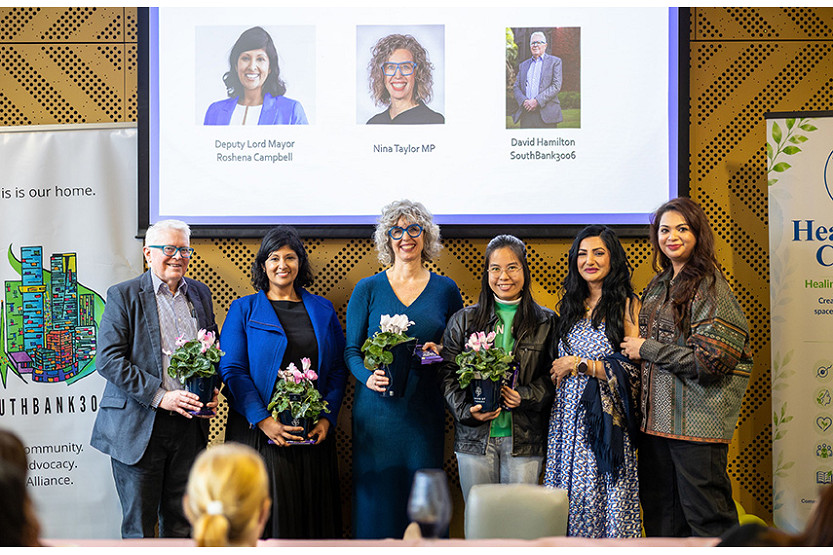
Healing, colour and connection in Southbank
When we opened bookings for our first Paint & Connect Southbank workshop, I hoped local women would be interested. I did not expect the tickets to go so quickly.
Read More
Creating space for healing and recovery in Southbank
Southbank is known for its energy. It is a place of movement, ambition and activity, where people live in high-rise apartments, walk busy streets, gather by the river and move quickly from one part of life to the next.
Read More
Sale of Hanover House signals likely end for Beulah’s STH BNK vision

Farewell Southbank News: more than a newspaper
 Download the Latest Edition