Council targets derelict sites as Southbank eyesores put on notice
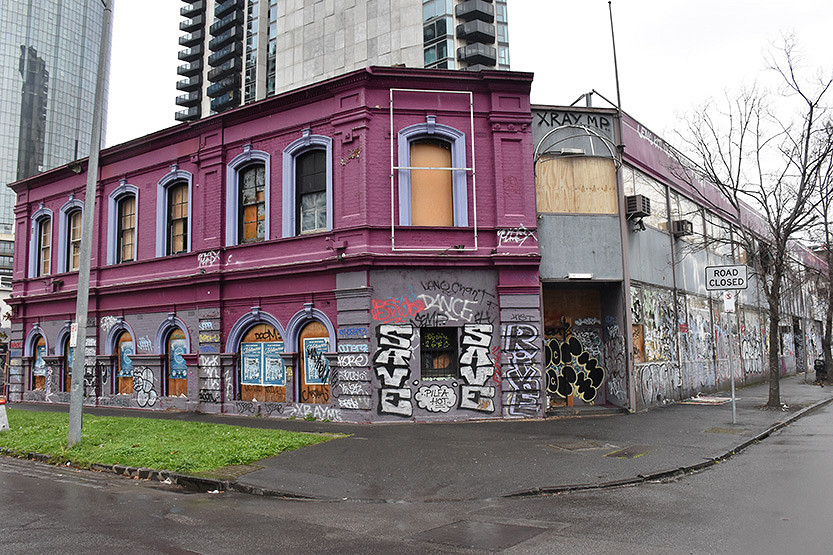

Several long-dormant and dilapidated sites in Southbank are now under active scrutiny by the City of Melbourne, following a unanimous council vote to “use every lever” to deal with vacant, unsafe and unsightly properties across the municipality.
At the September 2 Future Melbourne Committee (FMC) meeting, councillors backed a motion from Lord Mayor Nick Reece directing management to review penalties, clean-up powers, planning and building enforcement – even the potential use of differential rates – to force action on eyesore sites. The motion also seeks a report back by November 30 with proposed next steps toward a comprehensive policy to address the problem.
Since the meeting, council planners have circulated a list of high-priority properties now being watched. Three of them are in Southbank: 12 Riverside Quay (the former Esso House site), 56–58 and 60–62 Clarendon St, and 25–35 Power St. Each is emblematic of a broader malaise that locals say has dragged on for too long, blighting Melbourne’s riverfront gateways and key neighbourhood streets.
The Esso House building at 12 Riverside Quay was demolished in 2024 and, while a striking new tower and public open space are approved, there is still no clear start date. Residents and traders have been calling for temporary activation to prevent another long-term “hole in the ground” on Southbank Promenade. The site has previously been flagged by council and business groups as a candidate for interim public use until construction begins.

Just up the road, the hoardings around the long-vacant parcels at 56–58 and 60–62 Clarendon St remain marred by graffiti. Meanwhile, at 25–35 Power St – opposite Beulah’s STH BNK site – a permit history stretching back more than a decade has yet to translate to activity on the ground. Resident groups say these “missing teeth” in the streetscape weaken pedestrian amenity and discourage investment.
Under the FMC motion, officers will consider the adequacy of current penalties and compliance tools in the Activities Local Law (Part 13: Dilapidated, Dangerous and Unsightly Premises), options for rapid graffiti removal and murals, as well as planning and building powers “including but not limited to demolition orders and conversion into green space.” Cost recovery from owners is also on the table.
Speaking to the item, Cr Reece said the city wants to put “lazy landlords on notice”, adding that “vacant lots … in the busiest pedestrian areas of our city are unacceptable” and should be turned from “hoarded-up grey zones to accessible green zones,” even on a temporary basis. The motion also asks officers to explore updated definitions of vacant, dilapidated, unsafe and unsightly premises within the local law to tighten enforcement.
The crackdown follows sustained community pressure in Southbank. In 2023, Southbank Residents’ Association (SRA) president Tony Penna labelled the corner site at Kings Way and Kavanagh St – home to the heritage-listed former Austral Otis Engineering Works office building – a “disgrace”.
Despite its prominence at a key southern entry to the CBD and an approved mixed-use permit dating back to 2020, the building remains vacant and in a hazardous state, with broken windows and extensive tagging. Curiously, it does not appear on the council’s initial monitoring list. Residents say its omission underlines why the city’s new approach must be comprehensive – and visible.
However, Southbank News understands that complications surrounding the site, including its heritage grading and its carpark current being used have prevented it from being placed on the council’s list. The site also has a live planning amendment on a permit issued by the state government in 2011.
The Lord Mayor’s motion specifically asks officers to look beyond by-the-book compliance and to bring forward “every tool in the toolbox,” including potential use of differential rates and charges for persistently derelict sites, consistent with directions already outlined in the council’s 2025–26 budget.
Councillors emphasised the policy is not a blanket approach to all stalled projects but is targeted at the worst offenders where neglect has created safety risks or severe amenity impacts.
Cr Phil Le Liu said the measure aimed to deal with those who “take it a little bit too far,” while acknowledging many owners do work with the city to maintain their assets. Deputy Lord Mayor Roshena Campbell said Melbourne should look globally at how leading cities deter long-term blight, noting the wasted potential of vacant CBD sites amid a housing and open-space squeeze.
For Southbank, the immediate tests will be the high-profile riverfront and boulevard addresses on the council’s watchlist. Residents and traders want momentum: clearer hoarding timelines, cleaner frontages and, where development is years away, temporary uses that bring activity back to the street.
The city’s officers are now compiling advice on strengthened local laws, faster graffiti programs and enforcement pathways – up to and including demolition orders or temporary “green space” conversions. A report is due to return to councillors by November 30, setting up decisions before year’s end. •
Related Articles
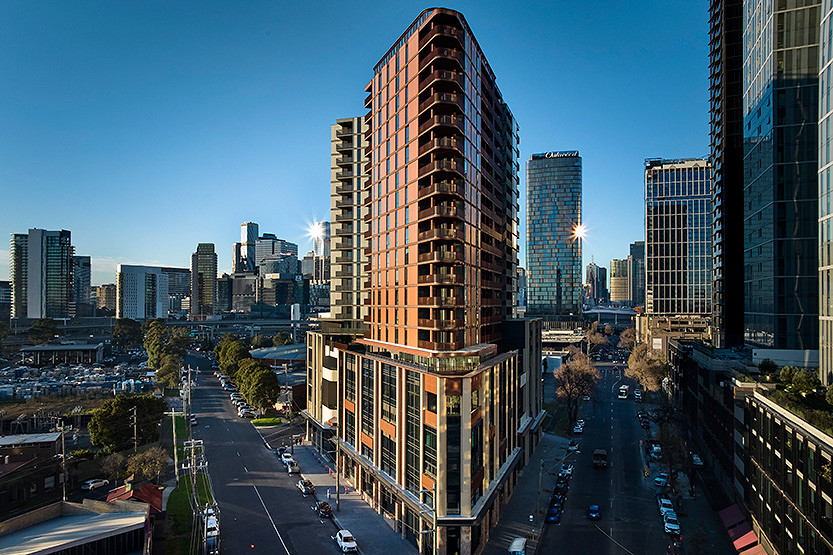
The Canopy reaches completion in growing Montague precinct
The Canopy has reached completion at 272 Normanby Rd, adding another major residential development to the fast-changing Montague precinct in Fishermans Bend.
Read More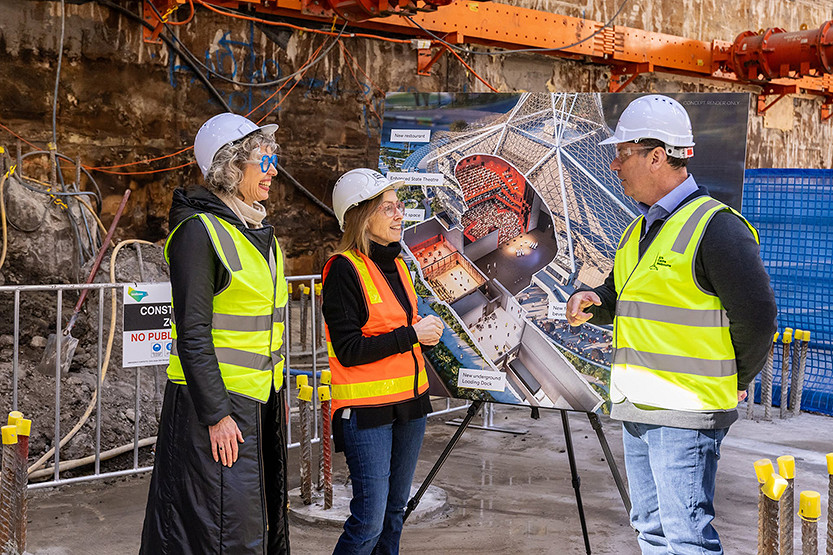
Arts Centre Melbourne expansion hits major milestone with underground works complete
A major step forward has been reached in the $1.7 billion transformation of Melbourne’s Arts Precinct, with excavation works behind Arts Centre Melbourne’s iconic Theatres Building now complete.
Read More
Greenline works recommence
Major construction activity along Birrarung Marr has recommenced as part of stage one of the City of Melbourne’s Greenline project.
Read More
Sale of Hanover House signals likely end for Beulah’s STH BNK vision

Farewell Southbank News: more than a newspaper
 Download the Latest Edition