Glimpse into the planning past reveals lost opportunity for Southbank
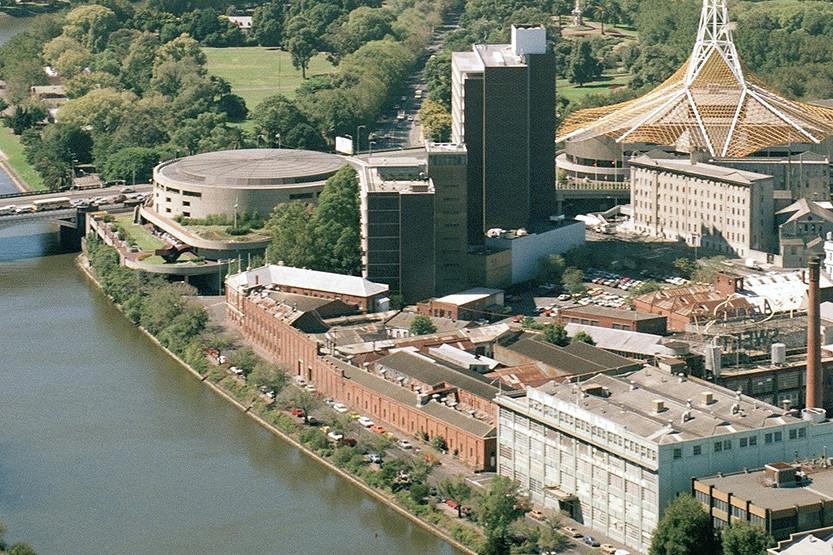
Recently released cabinet documents from the Cain and Kirner governments provide a glimpse into the early planning of some of Southbank’s major landmarks and, in the view of one expert, a reminder of “a monumental lost opportunity” for the precinct.
The Public Record Office Victoria opened a new tranche of cabinet records from the Cain and Kirner Labor governments on January 1, which it does annually under section 9 of the Public Records Act 1973.
According to former government planner Michael Buxton, the mention in a 1987 document of a doubling of land value in Southbank over 12 months points to the “scandal” of government failure in the suburb’s development.
Mr Buxton, a professor of Environment and Planning at RMIT’s School of Global, Urban and Social Studies, said the government hadn’t “pocketed a dollar” from the land’s massive 50 per cent “uplift”, nor had it got much for the land it actually sold at Southbank.
The government had also missed the opportunity to implement “proper strategic planning” and to mandate affordable housing for the area, he argued.
Documents show that in September 1987 the Cain government ministers for planning, major projects and public works were concerned about the construction of a Southbank Promenade, for which part of the money had come from federal bicentennial funding.
Their briefing to the cabinet economics committee recommended the tender for the $5.67 million project be escalated so it would be finished in 1988. As it turned out, the promenade wasn’t finished until 1990.
The works – for some landscaping, a river wall and a walkway between Queens and Princes bridges – were complementary to private development projects Riverside Quay and the Southgate development, the ministers reported.
And with Riverside Quay “well advanced”, “the effect of the progressive development of the south bank has been a 50 per cent increase in property values over the past 12 months,” they noted.
According to Mr Buxton, as the Labor government went about the “urban renewal” of the large brownfield site south of the river – which it had earmarked for redevelopment in 1984 – there had been a missed opportunity to introduce a “betterment tax” that could have been used to fund public services for the area.
A more dire failure came after the Kennett government’s election in 1992 when the detailed planning Labor had done for a liveable Southbank was relegated to the dustbin along with the original intention to apply stronger statutory planning rules.
With Victoria in serious debt and still feeling the effects of a national recession, the new Premier let loose with a free market, pro-developer, big project approach to development, failing to commit the required funds for infrastructure for the new neighbourhoods of Southbank and Docklands.
They were so desperate to get development going in both places that they didn’t want to inhibit profit, Mr Buxton told Southbank News.
“And so, they held out a huge incentive for developers, both financial but also in the design. They said to them, basically, ‘look, you can do what you like.’”
That approach had meant the loss of “any chance of getting a proper planned town centre, a proper set of community services – from schools and kindergartens to parklands,” he said, with as a result, the current government left struggling to find money to create parks.
Another dire failure, in the academic’s view, was the missed opportunity to mandate a proportion of all development as affordable housing – something developers would have accepted, he says, due to the very high profits they were making on cheap land, which was increasing dramatically in value.
“[Like] the Californian model, 20 to 25 per cent of all those high-rise residential towers could have gone into affordable housing if the government had had a policy, but they didn’t,” Mr Buxton said.
The Southbank that could have been, if Labor’s detailed 1980s plans had been followed – like those it had developed for Docklands – involved “low-rise, three- to seven-storey residential developments, walkable places and beautiful little town squares,” with a higher residential population than it now has because with proper planning much less land would be “lost to roads and car parks”.
The “very European” precinct would have been “one of the most attractive and interesting places in Australia to live,” Mr Buxton stated.
“Instead, we’ve got … arguably one of the worst performing high rise areas on the planet.” •
Related Articles
The Canopy reaches completion in growing Montague precinct
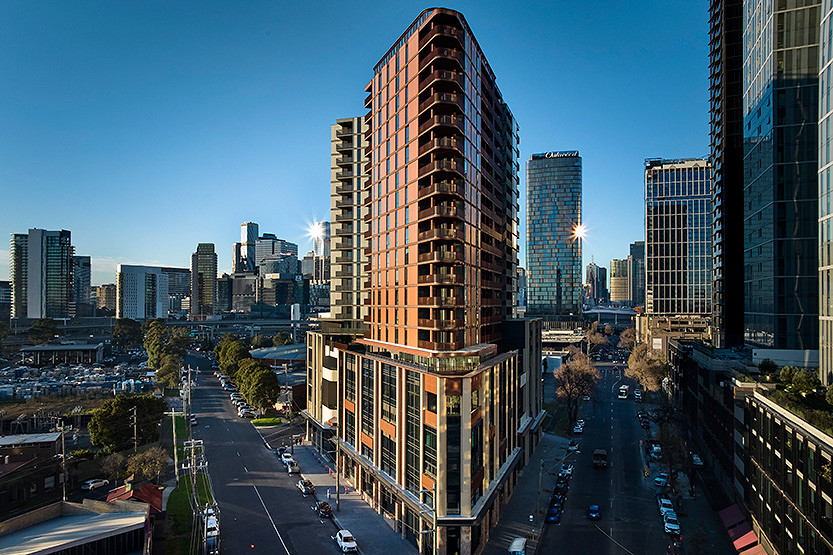
The Canopy has reached completion at 272 Normanby Rd, adding another major residential development to the fast-changing Montague precinct in Fishermans Bend.
Read More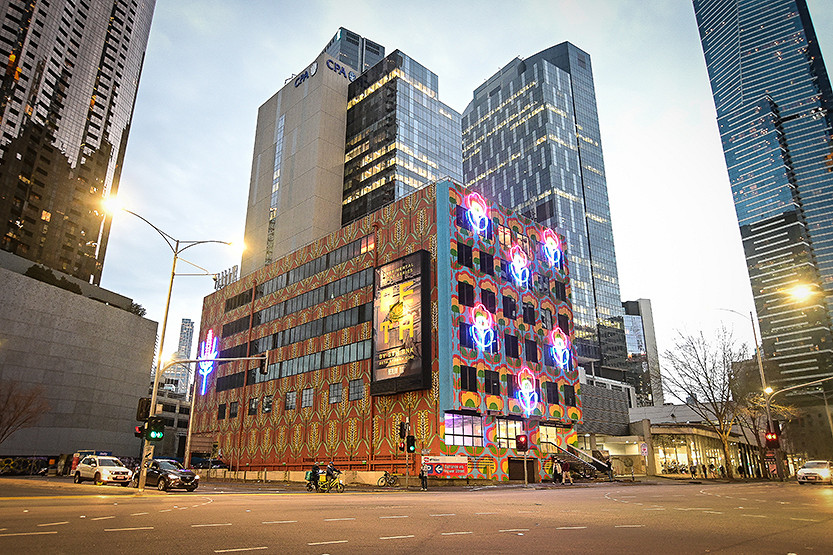
Sale of Hanover House signals likely end for Beulah’s STH BNK vision
The sale of Hanover House in Southbank appears to have all but extinguished hopes of Beulah delivering its iconic STH BNK by Beulah project in its originally approved form.
Read More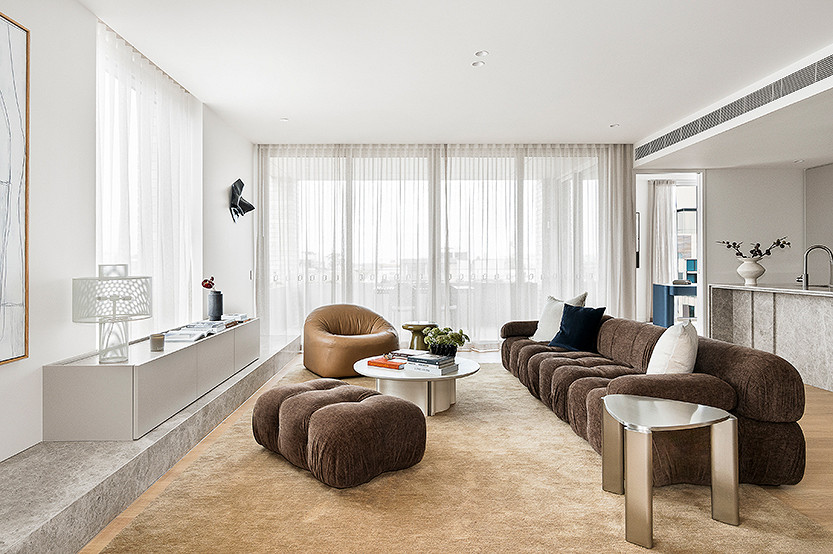
Emerald Place brings new life to South Melbourne
A new luxury residential development on the corner of Clarendon and York streets is helping reinvigorate South Melbourne’s main retail strip, close to Southbank and the CBD.
Read More
Sale of Hanover House signals likely end for Beulah’s STH BNK vision

Farewell Southbank News: more than a newspaper
 Download the Latest Edition