Inner-city residents impatient for change on strata issues

A range of organisations representing inner-city residents say radical reform on strata management is urgently needed. An expert report on the subject and the government’s response to it now overdue.
Forty years ago, there was no suburb of Southbank and hardly any residents in the area.
Since then, of course, an ongoing explosion of high-rise housing has transformed it into the most densely populated neighbourhood in Australia.
Although Southbank, with the majority of residents in towers of 50 units or more, bucks the national trend of smaller developments, it has been at the forefront of an expansion of apartment living that has occurred around the country.
With regulatory frameworks failing to keep pace with that change, claims of kickbacks, abuses of power and brewing class actions have been cropping up in the news.
The situation makes the current state government review and resulting reform “vital”, according to Southbank3006 president David Hamilton.
The Minister for Consumer Affairs, Nick Staikos, told parliament last year that the review of the Owners’ Corporation Act that the government commissioned was aimed at addressing “the probity and conduct of owners corporation managers, including conflicts of interest, unfair contracts and commissions”.
It also aimed to look at “hardship arrangements for lot owners struggling to pay fees, voting requirements among lot owners and measures to enforce compliance with the act,” among other things.
Southbank3006’s submission to the review “pushed for stronger strata laws,” Dr Hamilton said.
“We said we needed fairer governance; we wanted short stay accommodation reform and better voting laws that encourage participation.”
The government has to focus on governance, has to bring facility managers within a regulatory framework, has to put contracts under Australian consumer law; we need a strata commissioner – all of those things are vital.
Also important were “better trained managers, better trained committees, more accountability, better decision-making in committees, and also in owners’ corporations by fixing up the stupidity of the voting procedures.”
Adam Promnitz, from the “grassroots” Strata Owners’ Alliance, describes the strata industry as a “conflicted” “mess” and agrees an effective regulator, such as a strata commissioner, is crucial.
“The biggest problem with the industry is unfortunately we can’t find a single unconflicted area,” he told Southbank News.
“The issue we see is that everybody – particularly [with regard to] these large apartment buildings sees [the situation] as a licence to print money.”
In its submission to the review, the Strata Owners’ Alliance called for a range of changes including: a ban on exploitative fees and charges such as “extortionate late fees”; a fix for “unfair and uncompetitive strata contracts”; mandatory declaration of managers’ conflicts of interest, with managers held accountable for misconduct; simplified regulations that remove the need to involve lawyers; and a breaking of “the historical stranglehold of industry lobby groups over strata policy”.
“Victorian strata owners deserve a better deal without the exploitation, rip-offs and rorts which they currently experience,” the submission stated.
Also calling for change is the CBD-based organisation Mortgage Stress Victoria, which makes the case for members of an owners’ corporation to have a legislated right to hardship assistance.
“Victorians are living through a housing and cost of living crisis. Owners’ corporations fees are unnecessarily high, and owners’ corporations are unnecessarily putting peoples housing security at risk by engaging in aggressive debt recovery,” the group’s submission stated.
Data from Financial Counselling Australia had identified an alarming rise in forced bankruptcies resulting from owners’ corporation debts – meaning “people could face losing everything over $10,000 or $20,000,” CEO Nadia Harrison said.
The organisation detailed a range of changes it would like to see adopted around charges, commissions, transparency, manager conduct, complaints, dispute resolution and training.
Like Southbank3006 and the Strata Owners’ Alliance, it strongly supported the creation of an independent regulator – in the form of commissioner for owners’ corporations.
For Dr Hamilton, a better functioning system would help address mortgage stress problems in the owners’ corporation context.
“You’ll actually have better trained managers, better trained committees, more accountability, better decision-making in committees,” he said.
And with 2026 quickly ticking by, there was no time to be lost in moving towards that improved situation.
“This is an urgent matter,” Dr Hamilton said.
“We would like to see action by the government to address all these issues in the near term. “We just want it done now.”
The Victorian Department of Government Services didn't respond by deadline to questions about the expected date of the review’s release and the scope of the changes likely to result.
Related Articles

Strata reforms criticised as “tinkering around the edges”
Long-awaited reforms to Victoria’s owners’ corporation laws have been criticised by strata advocates as lacking the structural change needed to fix major problems in the state’s growing apartment sector.
Read More
“Plan now, pay less later”: local engineer urges Southbank high-rise owners to prepare for electrification costs
Howard Barnes has spent the past decade studying the guts of his building. A mechanical engineer and Tower 3 resident at Yarra’s Edge since 2013, he has a message for communities living in Melbourne towers built around 20 years ago or more: start planning – and saving – for electrification now.
Read More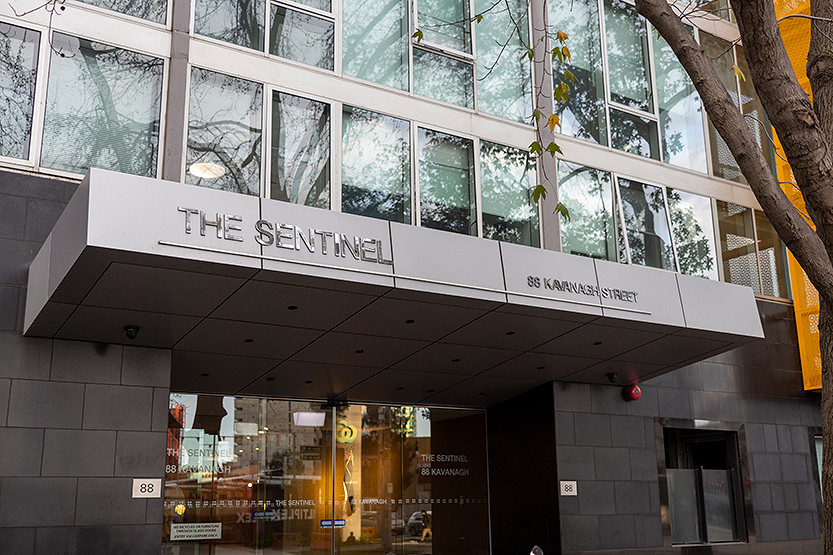
Owners seize back control at The Sentinel amid management dispute
Owners at The Sentinel residential tower in Southbank have voted to remove its former owners’ corporation committee, in a decisive move to regain control over building management following months of unrest.
Read More
Sale of Hanover House signals likely end for Beulah’s STH BNK vision

Farewell Southbank News: more than a newspaper
 Download the Latest Edition