Southbank OCs slow to adopt EV charging infrastructure
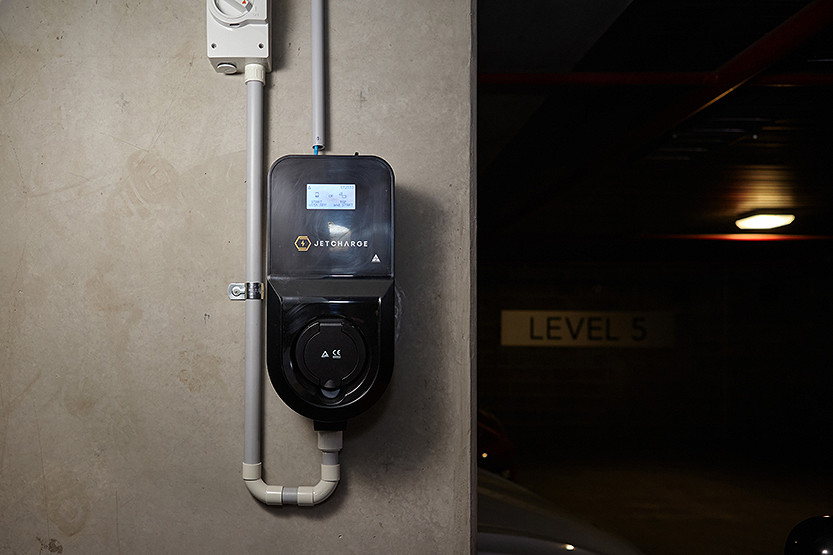

Despite electric vehicle (EV) sales reaching record highs in 2024, Southbank is lagging behind in implementing the infrastructure required for residents to easily charge their vehicles.
While there are plenty of options for public charging, there is growing concern that many owners’ corporations (OCs) have been slow to retrofit their buildings, limiting EV owners’ access to private charging.
According to EV consultant and long-time Southbank resident Dr David Hamilton, the benefits of retrofitting buildings with “state-of-the-art” facilities have not been fully appreciated by many OCs.
Dr Hamilton has conducted a large number of scoping studies across Melbourne. However, he has only completed five in Southbank. He believes this is a missed opportunity, particularly given the added value that EV charging capabilities can bring to a building.
In Australia, EV sales hit record levels in 2024, with more than 114,000 units sold, accounting for 9.7 per cent of all new car sales. Victoria alone is tracking at around 7.5 per cent of EV share in the first half of 2024, up from under one per cent in 2020.
The founder of Wattrix, Adam Farrugia, believes that while demand for EV charging is growing, uptake is still sluggish.
Wattrix specialises in retrofitting buildings to support EV charging, and Mr Farrugia has completed more than 70 feasibility and technical design studies, including 16 specifically in Southbank and Docklands.
“Many believe Southbank lacks sufficient public EV charging, but the real gap isn’t the number of chargers – it’s access to charging where residents actually live,” he said.
The public network around Southbank is growing, but apartment dwellers remain locked out of daily EV access unless their OC acts. Without leadership from OCs, EV readiness doesn’t happen.
“That disconnect is Southbank’s real infrastructure bottleneck.”
Mr Farrugia believes that misconceptions have stymied the growth of EV charging infrastructure in Southbank.
“Many OCs are held back by fearmongering about fire risks, which are not supported by the data or the ability to manage those risks. In fact, Internal combustion engine cars are 20 times more likely to catch fire in an apartment car park than EVs,” he said.
“There are misunderstandings around cost structures and the option of staged rollouts. Many also believe that EVs ‘aren’t selling’ or that mass adoption is far off – and a wait-and-see approach to government funding may never materialise.”
This poses a risk, according to Mr Farrugia, who said that delaying action on EV readiness would lead to contractor shortages as demand explodes, significantly higher retrofit costs due to urgency, and a growing risk of substandard, non-compliant installs.
“We’re already seeing poor-quality installations being rushed into buildings across Melbourne. Early action enables quality planning and long-term savings.” •
Related Articles
Southgate Avenue to get new crossing
The City of Melbourne says work to fix a local pedestrian crossing that is unsafe for people with mobility issues will start within months and further streetscape upgrades may be on the horizon.
Read More
Anzac Station opens with Metro Tunnel, transforming transport links through St Kilda Rd and Southbank
Melbourne’s new Anzac Station has officially opened to passengers with the launch of the Metro Tunnel, delivering the first heavy-rail connection to St Kilda Rd and reshaping how people move through the city’s inner south.
Read More
Whiteman St tram spur through Crown Casino revealed in government’s new Fishermans Bend transport plan
Whiteman St in Southbank could soon be home to a major new tram line running directly through the heart of Crown Casino’s complex, as part of the state government’s new Fishermans Bend Integrated Transport Plan (FBITP).
Read More
“Federation Square of the South”: council backs tower but pushes harder for Queensbridge Square
STH BNK site heads to market in major blow for Beulah’s stalled Southbank supertower
 Download the Latest Edition