Whiteman St tram spur through Crown Casino revealed in government’s new Fishermans Bend transport plan
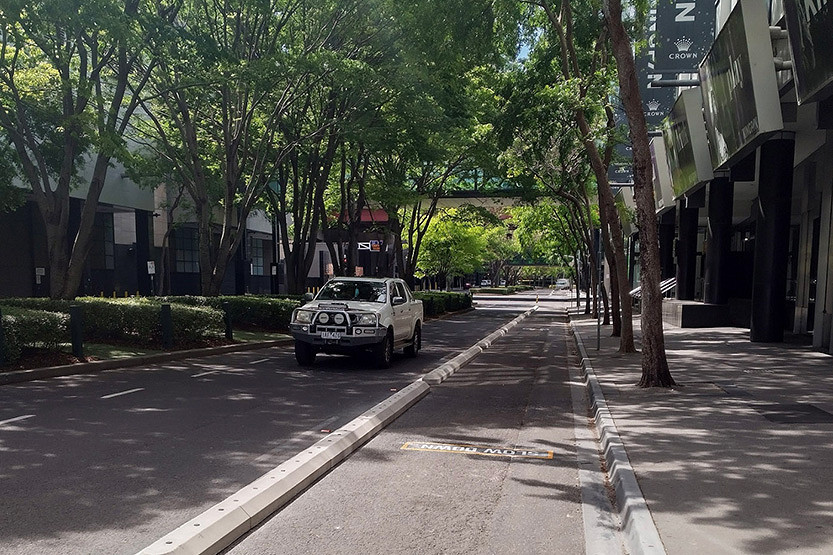

Whiteman St in Southbank could soon be home to a major new tram line running directly through the heart of Crown Casino’s complex, as part of the state government’s new Fishermans Bend Integrated Transport Plan (FBITP).
The plan, quietly released on the AFL Grand Final public holiday, signals a seismic shift in Melbourne’s tram network – positioning Southbank as the new gateway to Australia’s largest urban renewal project.
But hidden within the strategy’s 2050 transport map, one detail has caught many by surprise: a new tram spur running along Whiteman St, through one of the city’s busiest entertainment and traffic corridors.
If realised, the new tracks would branch off from the existing Route 58 tram service after stop 115 near the entrance to Crown Palladium from Queensbridge St through Whiteman St, connecting with the 109 and 96 tram corridors at Clarendon St before heading towards Fishermans Bend.
The result would be an expanded interchange hub at the Whiteman and Clarendon Street superstop, where trams bound for Southbank, Port Melbourne, St Kilda and the CBD would all converge.
While the state government’s plan does not detail the Whiteman St spur explicitly, the proposed route appears on the official 2050 transport network map – linking the 58 route directly into the 109 corridor. The government’s only textual reference to Southbank is a commitment to “deliver new tram lines from the Central City via Southbank rather than Docklands, to provide better service to dense precincts, with a new Ingles Street Bridge that is designed to be integrated with future development.”

The red arrow (right) points to the new tram route (in green) cutting through Crown Casino along Whiteman St in Southbank.
The proposed alignment would slice through the middle of Whiteman St, where Crown Casino, Melbourne Convention and Exhibition Centre and key hotel and residential towers generate thousands of pedestrian and vehicle movements daily. It is also a crucial east–west arterial linking Queensbridge and Power streets to Clarendon St, Normanby Rd and Kings Way, as well as a major entry point to the M1 freeway.
Laying new tram tracks would require the removal of the street’s wide median strips and mature trees. The project would also demand extensive streetscape changes, new overhead power lines and signalling infrastructure – all in one of the city’s tightest and most complex road environments.
Crown Resorts was contacted for comment but didn’t respond before deadline.
Southbank3006 president Dr David Hamilton said he didn’t believe the proposal had been well thought-out.
“The current proposal does not appear to have been fully designed in terms of its traffic management implications, much less its use as an already significantly constrained road space,” Dr Hamilton said.
“It would also impact on any plans Crown may have to open its Whiteman St frontage or to realign the multiple access points it has on Queensbridge St. We’d urge that this spur be considered as something that comes off the existing Clarendon St lines only.”
“However, it’s good to see that the government now considering alternatives that would be more cost effective and would deliver services quicker to facilitate development of Fishermans Bend.”
Southbank Residents' Association president Tony Penna said he was "surprised to learn of proposed changes to our tram routes in the heart of our neighbourhood".
"While there may be some merit in the proposal, we are disappointed there has been no significant public announcement for closer scrutiny of the plans," he said.
We will be watching this closely and hope the Minister sees fit to engage with the local community.
The revelation follows the government’s decision to scrap its controversial billion-dollar tram bridge over the Yarra River, which had long been opposed by many Docklands residents living in Yarra’s Edge.
Under the revised transport plan, new tram services will instead be routed via Southbank to reach Fishermans Bend – creating two new spurs branching off from Ingles St: one leading into the Sandridge and Wirraway precincts via Fennel St, and another heading into Lorimer and the Employment Precinct via Turner St.

The government has framed the new Southbank route as a cost-effective alternative to the abandoned Collins St tram bridge, which was criticised for its price tag and environmental impact. But while the shift relieves pressure on Docklands, it pushes new transport and construction challenges directly onto Southbank.
Fishermans Bend Business Forum president and NSL Property managing director Guy Naselli that while the reconfiguration “makes sense from a cost perspective”, delays in decision-making have already set the project back years.
“Had the government been open to considering more affordable options sooner, there might already be trams running into Fishermans Bend by now,” Mr Naselli said. “Frankly, it’s not so much how it gets there – but it’s got to get there.”
For Southbank, the addition of a new tram corridor could transform Whiteman St into one of Melbourne’s largest tram interchanges outside the CBD.
The plans would also likely impact the council’s plans to create 1.2 hectares of new parkland at the adjoining Normanby Rd Reserve.
The government’s strategy divides projects into three broad “horizons”, but provides no definitive timelines or funding commitments. The Southbank tram link sits within “Horizon Two”, the medium-term stage focused on “scaling up” public transport connections to Fishermans Bend. Horizon Three, stretching into the 2040s, includes a proposed heavy rail tunnel running beneath Docklands and Fishermans Bend, with stations at Sandridge and the Innovation Precinct in Fishermans Bend.
In a joint statement released on October 8, City of Melbourne Lord Mayor Nick Reece and City of Port Phillip Mayor Louise Crawford were both critical of the government’s new transport strategy.
“We’re disappointed the Victorian Government’s plan puts buses ahead of trains and trams, putting the brakes on Australia’s biggest urban renewal project and jeopardising the future of Victoria’s economy,” Cr Reece said.
“This is how we build a bigger, better Melbourne. We need to get these big calls right. I’m not aware of any other project that can unlock this scale of housing growth with the backing of such strong market demand.”
Cr Crawford added that the government’s move to a “demand responsive approach, rather than providing public transport as a catalyst to stimulate growth” represented a “fundamental shift” that risked under-development, less certainty, more congestion and fewer homes and accessible local jobs being created.
While the FBITP paints a long-term vision of integrated mobility, Mr Naselli says the lack of clear delivery dates is concerning.
“You can’t run a project without a program and completion date,” Mr Naselli said. “Unless there are hard dates, it’s just shooting arrows into the sky and hoping one lands.”
By 2050, Fishermans Bend is expected to house 80,000 residents, employ 80,000 workers and attract 20,000 students. •
Related Articles
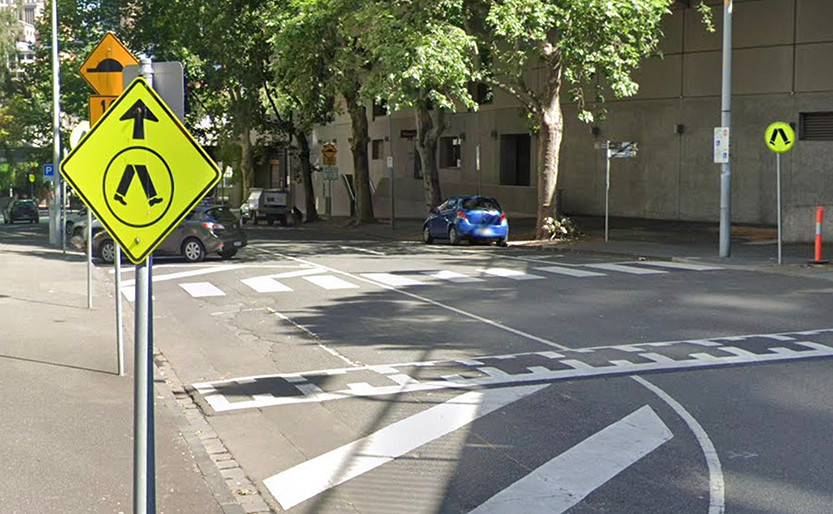
Southgate Avenue to get new crossing
The City of Melbourne says work to fix a local pedestrian crossing that is unsafe for people with mobility issues will start within months and further streetscape upgrades may be on the horizon.
Read More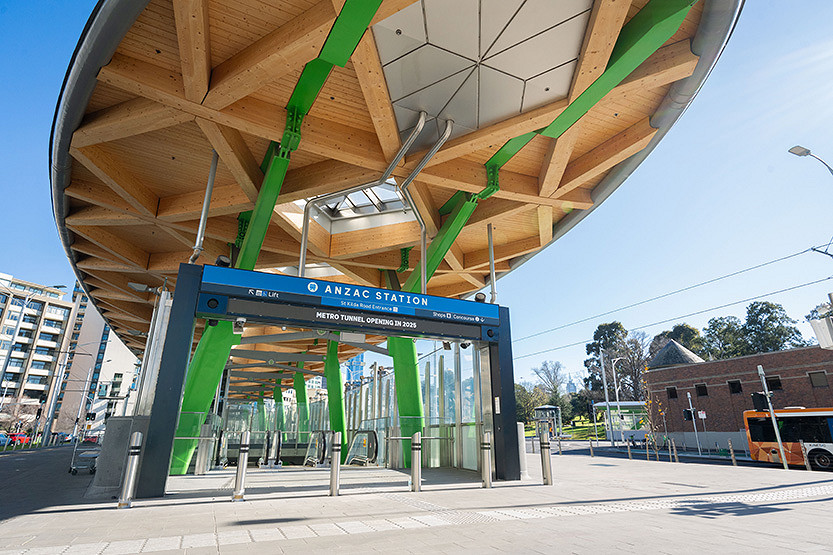
Anzac Station opens with Metro Tunnel, transforming transport links through St Kilda Rd and Southbank
Melbourne’s new Anzac Station has officially opened to passengers with the launch of the Metro Tunnel, delivering the first heavy-rail connection to St Kilda Rd and reshaping how people move through the city’s inner south.
Read More
What lies behind Melbourne’s slow uptake of EV chargers in apartments?
Jamie Schachter and his wife are proud electric vehicle (EV) owners, and when they decided to relocate from Queensland to Melbourne, they discovered it wasn’t easy to find an apartment with EV charging stations.
Read More
Sale of Hanover House signals likely end for Beulah’s STH BNK vision

Farewell Southbank News: more than a newspaper
 Download the Latest Edition