Purchasers left waiting as questions grow over deposits tied to stalled STH BNK project
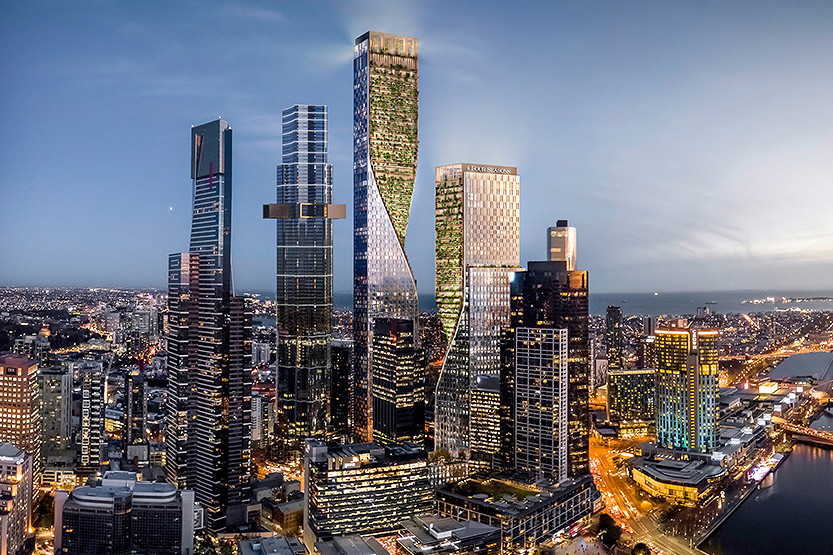

Concerns are mounting among apartment buyers at the stalled STH BNK by Beulah development in Southbank, with at least one purchaser questioning how long deposits can remain tied up while construction on the landmark project remains uncertain.
The $2.7 billion development, planned for the former BMW site at 118–164 City Rd, was once promoted as Australia’s tallest building. Featuring twin towers and the striking “Green Spine” design by UNStudio and Cox Architecture, the project promised apartments, a hotel, offices, retail and public amenities.
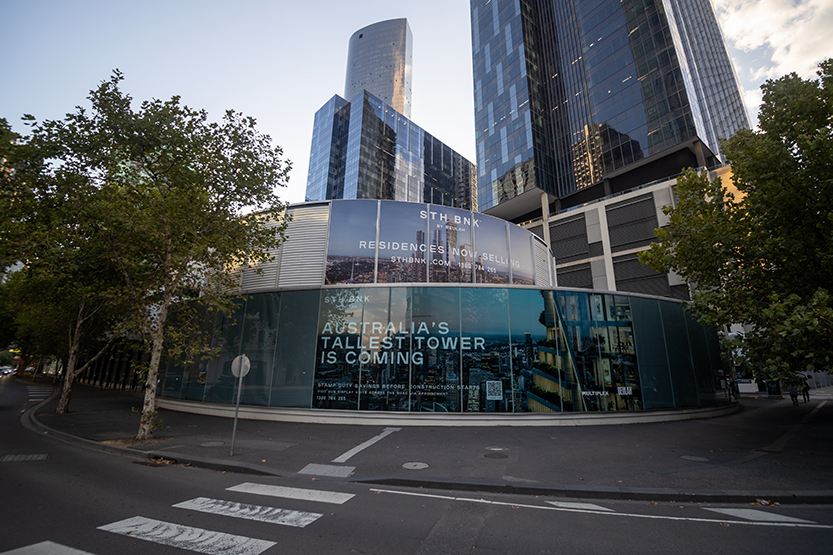
But nearly four years after some buyers signed contracts, construction has yet to begin and the future of the project remains unclear following the administration of the development’s project management entity in early 2025.
One purchaser, Denise, told Southbank News she signed an off-the-plan contract in August 2022 and paid a deposit of around $297,000 shortly afterwards.
Denise said she had since tried repeatedly to obtain clarity about the project’s future and requested the return of her deposit.
“Purchasers like myself are left in limbo,” she told Southbank News.
Our money is tied up indefinitely under a long sunset clause, while there is no visible progress on site and no transparent communication about the project’s future.
She said phone calls, emails and written correspondence seeking information about funding, construction timelines and the project’s progression had not resulted in clear answers.
“This is not just about one contract – it is about consumer protection, transparency and accountability in major property developments,” Denise said.
Her contract of sale, reviewed by Southbank News, relates to the purchase of apartments within the STH BNK project and includes provisions typical of off-the-plan developments. Purchasers are warned that a substantial period may elapse between signing the contract and becoming the registered proprietor of the property.
According to the contract and subsequent correspondence, the agreement allows for a registration period of up to 120 months – or 10 years – from the day of sale for the plan of subdivision to be registered.
This effectively functions as the project’s sunset timeframe.
In written correspondence to Denise in February this year, Beulah stated that the contract “remains on foot” and that the timeframe for rescission rights had not yet arisen under the agreement.
The developer also confirmed that Denise’s deposit remains held in its solicitors Maddocks’ trust account and is accruing interest.
Beulah said the contract provided for the 120-month registration period, within which the plan of subdivision is required to be registered.
“For completeness, we confirm that written notice under Section 9AC of the Sale of Land Act 1962 was served … in December 2023 together with correspondence outlining amendments to the plan of subdivision,” the company wrote.
Denise disputes receiving that notice and has requested evidence that it was properly served.
She has proposed that the parties mutually rescind the contract and return the deposit, arguing that the prolonged delay and uncertainty surrounding the project have fundamentally changed the circumstances under which she agreed to purchase the property.
The issue raises broader questions about the protections available to buyers who purchase off-the-plan apartments in developments that face long delays or financial pressure.
STH BNK by Beulah has been one of Melbourne’s most high-profile and ambitious developments. Since first unveiling the project in 2018 following an international design competition, the developer has undertaken an extensive marketing campaign promoting the landmark project.
However, the development has struggled to progress amid rising construction costs and a challenging financing environment.
In February 2025 the project’s management entity, BSSPV Pty Ltd, was placed into voluntary administration after mounting debt and disputes with project consultants.
At the time, Beulah said the move was intended to allow additional time to pursue alternative strategies to realise the project.
Subsequently, the planning permit for the development was extended until April 2027, providing additional time for construction to commence.
Despite that reprieve, no construction activity has begun on the site.
Industry observers say stalled projects are not uncommon in the current market, where construction costs have escalated sharply and financing large residential towers has become increasingly difficult.
But for individual buyers who committed to off-the-plan purchases years earlier, the uncertainty can create complex financial and legal situations.
Under Victorian law, deposits for off-the-plan sales must be held in trust until settlement occurs. However, the contractual terms of individual developments – including sunset clauses and registration periods – can significantly affect a purchaser’s ability to withdraw from a contract and recover their deposit.
Denise said she believed the situation highlighted the need for greater scrutiny of how off-the-plan developments are regulated.
“Should developers be able to hold purchasers’ deposits for up to 10 years without delivering construction?” she asked.
“What protections exist for buyers when large-scale developments stall or face financial pressure?”
“I believe many purchasers may be facing similar uncertainty,” she added.
In response to a series of questions from Southbank News, a spokesperson from Beulah said that plans for its STH BNK project continued “to progress” while “navigating broader economic and construction-sector conditions that have affected many major projects”.
It added that it had previously communicated to purchasers this year that it was in discussion with various stakeholders including “a well-established, reputable potential development partner regarding the next phase of the project”.
“For developments of this scale and complexity, contractual timeframes are structured to account for the planning, approvals, pre-construction and construction processes involved in delivering projects of this nature,” the spokesperson said in regards to the 120-month registration period.
“The construction timeline will be confirmed once discussions regarding the next phase of the development are finalised.”
“Purchasers have been kept informed as the project has progressed, including through an update provided in early February outlining the current status of the development and confirming that discussions with a potential development partner are under way.”
While it said the number of purchasers or the aggregate value of deposits were not publicly disclosed, it reiterated that strong buyer demand had resulted in around 80 per cent of apartments being pre-sold during the sales campaign.
In relation to cases where purchasers raised enquiries regarding their contracts, it said “these matters are considered on a case-by-case basis in accordance with the relevant contractual arrangements. Our team continues to respond directly to purchaser enquiries where clarification is required.”
Questions were also put to the Victorian Minister for Consumer Affairs Nick Staikos regarding the consumer protections available to buyers involved in delayed off-the-plan developments.
In response, a Victorian Government spokesperson said, "We understand how difficult this situation is for buyers - that's why under Victorian law we have a range of measures in place to protect off-the-plan buyers."
"These include limits on deposits, rights to recover deposits if key milestones like subdivision registration are not met, and restrictions on developers cancelling contracts under sunset clauses," the spokesperson said.
"Purchasers are encouraged to seek independent legal advice to understand their options and if a buyer thinks there has been misleading conduct they should contact Consumer Affairs Victoria."
On background, the government said buyers may end a contract and recover their deposit if the plan of subdivision is not registered by the contractual deadline or the default 18-month period.
2019 reforms to the Sale of Land Act 1962 also prevent developers from cancelling contracts under sunset clauses unless the purchaser agrees or the Supreme Court of Victoria approves the rescission.
Under the Australian Consumer Law, false and misleading representations are prohibited when advertising house and land packages. This includes false or misleading representations concerning the characteristics of the land or the existence or availability of facilities associated with the land.
These laws mean developers cannot knowingly publish false representations or false promises about land.
While off the plan developments can take time, contract terms that allow developers to delay projects for many years while buyers remain locked in may also raise issues under Australia’s unfair contract terms laws.
Consumer Affairs Victoria monitors and enforces compliance with these laws. Anyone concerned about misleading conduct should report this to CAV. •
Related Articles
Sale of Hanover House signals likely end for Beulah’s STH BNK vision
The sale of Hanover House in Southbank appears to have all but extinguished hopes of Beulah delivering its iconic STH BNK by Beulah project in its originally approved form.
Read More
Emerald Place brings new life to South Melbourne
A new luxury residential development on the corner of Clarendon and York streets is helping reinvigorate South Melbourne’s main retail strip, close to Southbank and the CBD.
Read More
New $800 million tower unveiled for Melbourne Square precinct
A major new residential tower has been unveiled for Southbank, with developer OSK Property announcing Aura as the next phase of the $3.5 billion Melbourne Square precinct.
Read More
Sale of Hanover House signals likely end for Beulah’s STH BNK vision

Farewell Southbank News: more than a newspaper
 Download the Latest Edition