City of Melbourne seeks seat at table on native title claim
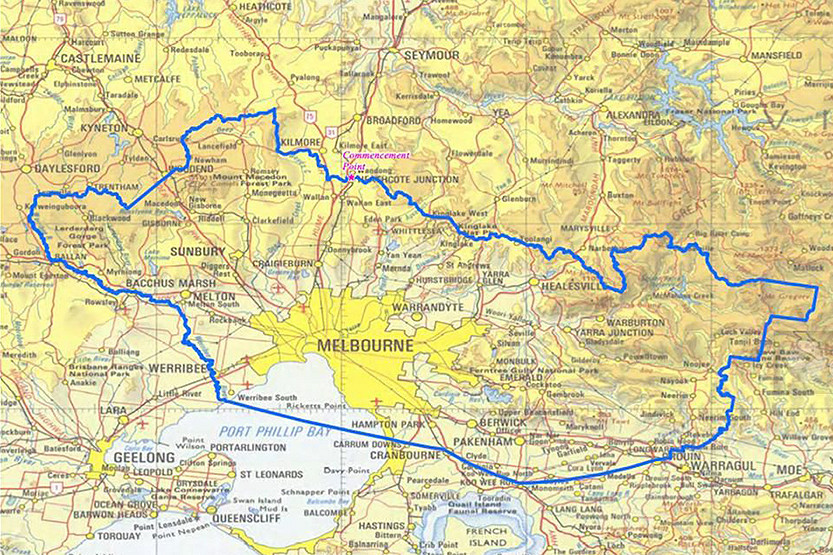
The City of Melbourne has voted to join proceedings in the Federal Court relating to a native title claim over metropolitan Melbourne and surrounding areas.
The claim, lodged on October 30 last year on behalf of the Wurundjeri Woi-Wurrung people, covers an area of approximately 10,424 square km extending from the Werribee River in the west to the Dandenong Ranges in the east and Mordialloc Creek in the south.
Registered in the name of 11 individuals, it takes in 36 council areas.
The claim excludes freehold land and areas where native title has been extinguished by public works, relating principally to Crown land where native title may have survived, including parks, gardens, reserves and some waterways.
The native title rights claimed include the right to “speak for” Country – as the traditional authority – as well as to hunt, fish and gather resources and to protect places of cultural significance there.
Lead claimant Perry Wandin, whose ancestor William Barak was a Wurundjeri leader said to have been present as a child when John Batman met with elders to “purchase” the Melbourne area in 1835, told the ABC last year the claim was part of a multi-generational struggle for recognition of his people’s connection to land.
Native title wasn’t about taking over but being able to control Crown land, he said.
We want to be traditional owners of Melbourne, of Naarm as we know it.
In South Australia, where the Kaurna people were recognised as holding native title over parts of Adelaide in 2018, the title was found to exist only in relation to 17 parcels of land.
The recognition has been widely regarded as symbolically important.
In practice, it has resulted in a strengthening of the Kaurna people’s role in land management and the protection of places of cultural significance.
When it was lodged last year Premier Jacinta Allan described the Wurundjeri Woi-Wurrung native title claim as a positive step, comparing it to the Dja Dja Wurrung settlement covering her Central Victorian electorate, which was reached more than a decade ago.
“This is a positive thing for traditional owner groups to come to their determination that they are ready to take this step,” she said.
Victoria has had its own framework for recognising traditional owner rights since 2010, the Traditional Owner Settlement Act, which provides the option of negotiating a settlement with the state government rather than pursuing a court-based native title claim.
The Wurundjeri Woi-Wurrung are instead pursuing native title through the courts.
Introducing the issue at the June 30 council meeting, Lord Mayor Nick Reece said the City of Melbourne had been invited to join the Federal Court proceedings as a respondent under the Native Title Act, and doing so would provide the opportunity to protect its legal interests and “participate in any determination affecting land under our management”.
“Joining the proceedings would ensure that council has a seat at the table,” he said.
“And I do want to stress that in voting for this and seeking that seat at the table, we do this in good faith.”
“It allows us to understand the claim, assess implications and influence any agreement or determination. It also supports clarity on how Native Title rights may coexist with public infrastructure and our service delivery responsibilities.”
Deputy Mayor Roshena Campbell agreed it would be remiss of the council not to take up “the opportunity to be heard”.
Native title proceedings were relatively untested in Victoria, she said, and the council would “watch with interest as to the position” [and] approach” taken by the other councils affected by the claim.
The proceedings will take a number of years to be determined, the meeting heard, especially if the Boonwurrung Traditional Owner group make an overlapping application, as is expected.
Southbank News contacted several inner-city councils to ask if they were also joining the proceedings.
Merri-bek, one of only three municipalities to respond by deadline, said it was considering its response.
Stonnington CEO Dale Dickson said his council considered it to be in the best interests of the community to join the proceedings as a respondent and was currently taking the necessary steps to do so.
City of Port Phillip CEO Chris Carroll said, "Our Council is in the process of being briefed and does not have a formal position yet". •
Related Articles

Council to retire Big Belly bins as new “smart” fleet rolls out
The City of Melbourne will begin replacing its ageing Big Belly bins with 500 new smart compacting bins from August 15, following renewed criticism over overflowing rubbish across the CBD and Southbank.
Read More
Graffiti delays expose gaps between council and state agencies
The City of Melbourne has acknowledged that graffiti on key city assets can remain in place for months while it continues trying to negotiate faster and more consistent removal arrangements with state authorities.
Read More
Public jab points to deeper Town Hall tensions
A public social media jibe by City of Melbourne (CoM) councillor Owen Guest has exposed fresh questions about unity, attendance and council-related travel at Town Hall, as the current council approaches the halfway point of its term.
Read More
Sale of Hanover House signals likely end for Beulah’s STH BNK vision

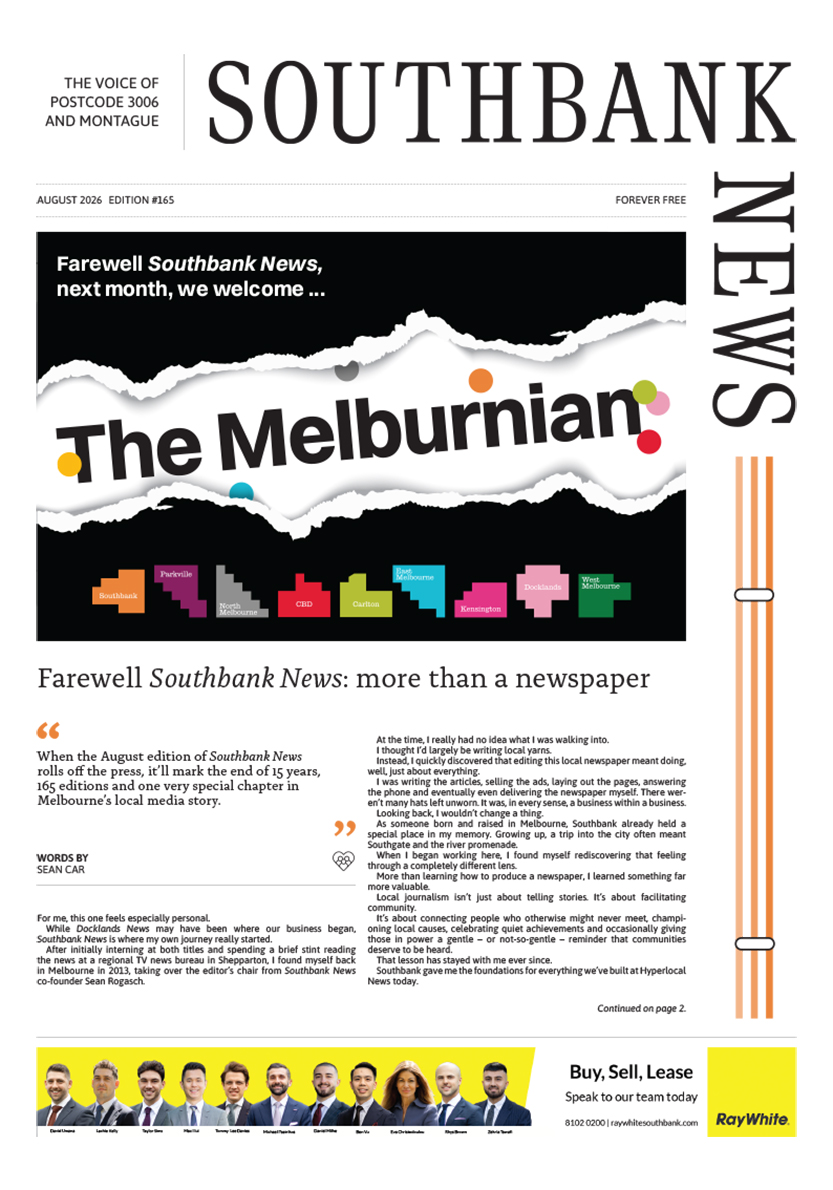
Farewell Southbank News: more than a newspaper
 Download the Latest Edition