Easter is close
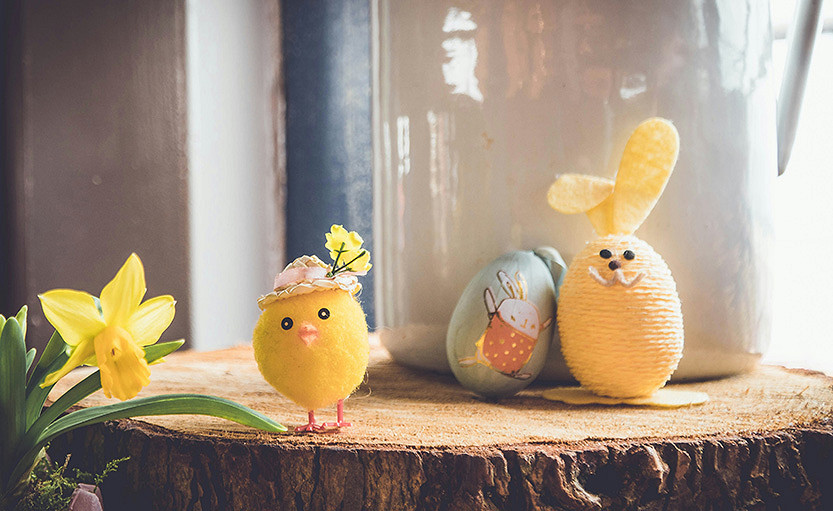
As cultural and commercial sentinels our supermarkets have, since shortly after Christmas, heralded this approaching season with buns, chocolate and camping supplies. Irrespective of your religious and cultural preferences, Easter is good.
From a Christian perspective Easter celebrates God’s unflinching commitment to life. In many human settings this is especially significant where life seems to count for very little. Consider what you see and accept as normal. Accusations of “not-being-enough”, of being difficult, disappointing or inadequate are sufficient to keep our mortality firmly before us and turn us away from life.
These accusations cultivate apprehensions that minimise our value and place in the world and threaten to crush our spirits. The accusations might spotlight our age, gender, non-gender, ethnicity, wealth, opinions, perceived intellect, social position, physical ability, or our physical form. And, sadly, the accusations also find their origins from deep within us, spoken by our own voices. Not all wars are fought in the open.
Hostilities happen among and between us and, like every war, they start with disappointment and a hatred of life. With someone else’s life. With our own life. Yet God remains unflinchingly committed to our lives (Lamentations 3:22-23) through Jesus Christ (Romans 5:8). It makes Easter good.
My perspective might sound like a ridiculous, grim overstatement but let’s consider lived experiences such as skyrocketing costs of living and declining housing availability through this lens. These realities are often portrayed primarily as policy and economic matters to be solved by better, more improved, harder working and smarter versions of ourselves. But is that how they are experienced? I suspect that for people directly affected these are also matters of dignity and identity. Insufficient income, no matter how hard and smart people work, and housing insecurity diminish people both from the outside in and the inside out. In the business of life, they are cruelly stigmatised with failure, but that’s not the truth. Economies are seldom equitable. They are skewed, and wealth is barely shared. It is taken, with an opaque hatred for life that is normalised either as cleverness, indifference or entitlement.
God’s unflinching Easter commitment challenges us to not only see our own lives differently, but to also consider the lives of other people with expansive, reckless generosity. To consider a world where condemnation is suspended and life, all life matters.
In the 40 days leading to Easter some Christians observe a season named Lent. People commonly associate this season with fasting or self-denial, but those practices miss their point when they are focused only on virtuously becoming better versions of ourselves.
Such self-improvement projects can fail to adequately deal with our experiences of diminished lives. The lives where we are “never enough” and lives where others, by our judgement, are “not enough” either. In Lent we fast or put the things of life aside to ask God, the giver and meaning maker of our lives for the help that we need to see and value all life with newness and joy.
It might take some time to understand the shape of God’s unflinching commitment to your life, and the lives of those who share your spaces. It will take profoundly unnatural humility, and it is done prayerfully and receptively. It asks us to put the things of life aside and to soften our own disappointment to hear God speak heart to broken heart.
Easter is good. God bless you this season. •
Related Articles

Humans of Southbank
In 2010 Brandon Stanton began a project entitled Humans of New York.
Read More
Human touch
Do you have a favourite coffee shop? What makes it your “go-to” place? My hunch is that while good quality coffee is important there are other things that encourage your loyalty.
Read More
Southgate’s sights and sounds
Even as winter approaches entertaining street performers continue to charm our Southbank neighbourhood.
Read More
Sale of Hanover House signals likely end for Beulah’s STH BNK vision

Farewell Southbank News: more than a newspaper
 Download the Latest Edition