“Need to get our own backyard in order”: SRA’s plea to council on graffiti
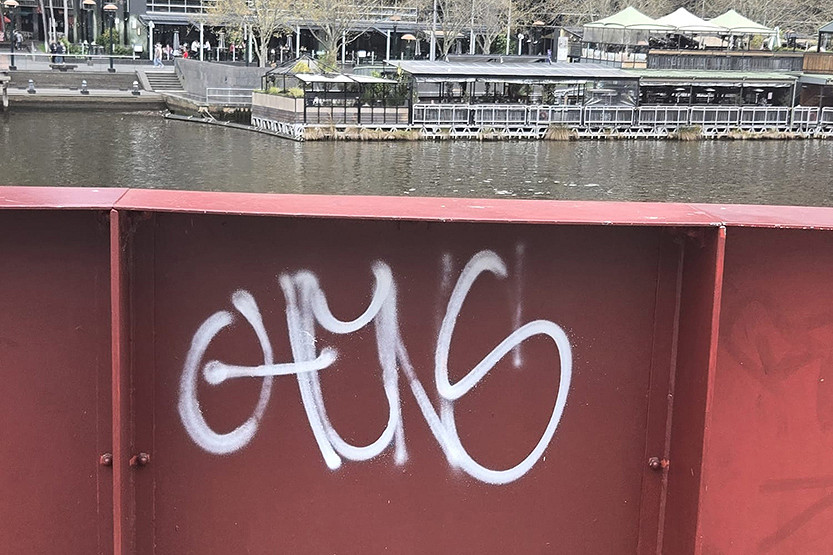
An endorsement of the City of Melbourne’s improved graffiti management was tempered by comments from Southbank Residents’ Association president Tony Penna urging attention to persistent problem areas as well as big picture initiatives.
Southbank Residents’ Association (SRA) president Tony Penna contributed the sole note of discord to discussion of the council’s improved management of graffiti at a Future Melbourne Committee meeting last month.
The committee heard the council’s customer service satisfaction rating had gone up more than 10 per cent to 88 per cent on the issue, and its customer service score was an “excellent” 4.7 out of five.
Lord Mayor Nick Reece put graffiti management “at the top of the list” of things the council had made real progress on in its current term.
“The city is looking cleaner. And that hasn’t happened by chance. It hasn’t happened by magic. It’s because there’s a lot of hard work, effort and focus that is going into lifting standards here at the city,” he said at the February 17 meeting.
Councillors heard that standards had been lifted after a committee resolution on the issue 12 months ago, and success had come largely as the result of the council partnering with other organisations, improving its reporting systems and renewing its focus on cost recovery.
A progress report presented by director of waste and recycling Vince Macolino laid out the council’s negotiations, trials and agreements with organisations including the City of Yarra, VicRoads, Metro Trains, VicTrack and Yarra Trams, and its dealings with Victoria Police, which included providing police information about “top taggers” who the council was monitoring.
Under an agreement with the Department of Justice and Community Safety, graffiti offenders could be directed to do their community corrections order work within the municipality, something that was seen to reflect the council’s “You Spray, You Pay” principle.
Taking civil action against offenders to try to recover property damage costs was an option, according to the report, but legal proceedings could be expensive.
A standout development, the committee heard, was the introduction of the Snap Send Solve reporting app, which had reduced the duplication of requests, freeing up more time for workers to tackle graffiti removal.
While Mr Penna welcomed the council’s work on partnerships and advocacy, he urged it to maintain focus on its on-the-ground performance.
“Many residents or ratepayers continue to experience persistent tagging in high foot-traffic areas, slow response times to non-offensive graffiti, repeated vandalism in the same locations without long-term mitigation strategies, and a perception that some areas of the municipality receive inconsistent levels of attention,” he told the meeting.
“We need to also get our own backyard in order.”
Cr Reece acknowledged more work was needed but said the council was “definitely on the right trajectory,” singling out the one-hour removal policy for racist and hateful material as a “great initiative”.
The committee also heard that new graffiti management FAQs and guidelines for preparing victim impact statements were to be published on the council’s website and voted unanimously to note the report and continue strengthening Melbourne’s graffiti management framework. •
Related Articles

Council to retire Big Belly bins as new “smart” fleet rolls out
The City of Melbourne will begin replacing its ageing Big Belly bins with 500 new smart compacting bins from August 15, following renewed criticism over overflowing rubbish across the CBD and Southbank.
Read More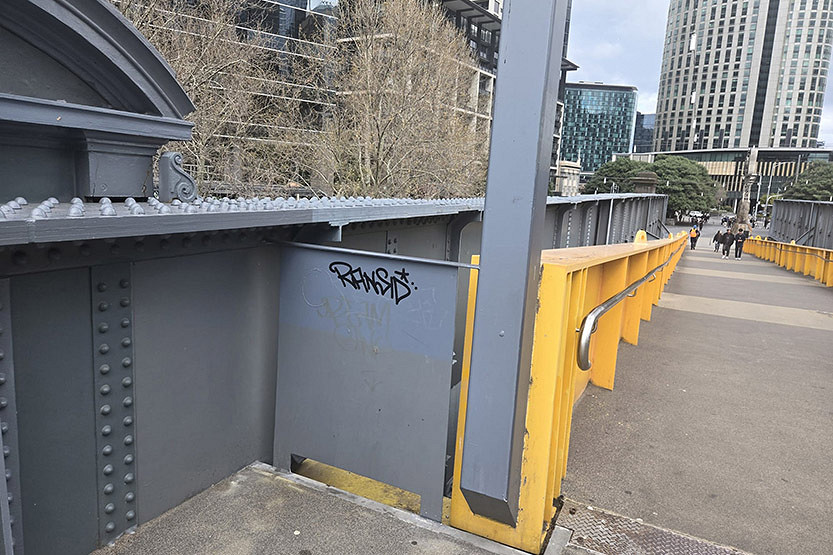
Graffiti delays expose gaps between council and state agencies
The City of Melbourne has acknowledged that graffiti on key city assets can remain in place for months while it continues trying to negotiate faster and more consistent removal arrangements with state authorities.
Read More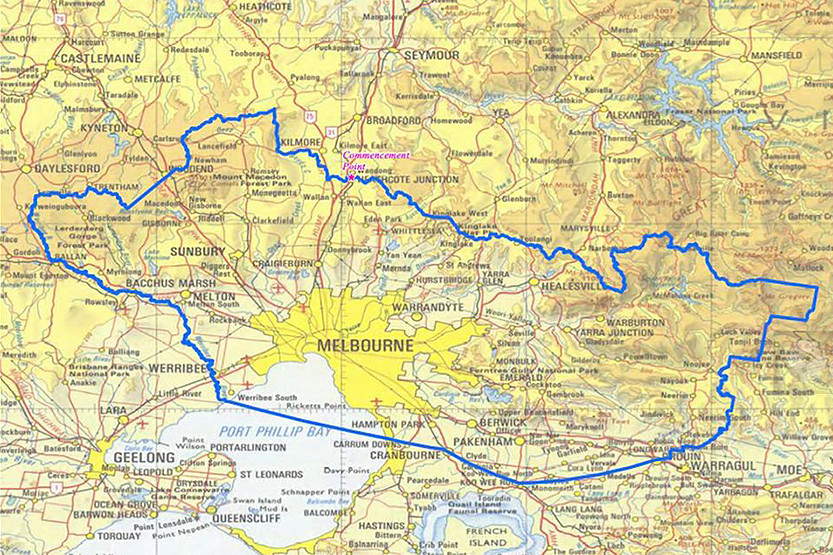
City of Melbourne seeks seat at table on native title claim
The City of Melbourne has voted to join proceedings in the Federal Court relating to a native title claim over metropolitan Melbourne and surrounding areas.
Read More
Sale of Hanover House signals likely end for Beulah’s STH BNK vision

Farewell Southbank News: more than a newspaper
 Download the Latest Edition