The yes and no of things
Never let the truth get in the way of a good story. Opinions, couched as social and political commentary, are plentiful.
Self-appointed experts offer their opinions about the actions of “others”; the motivations behind those actions; the possible meaning and consequences of those actions; and the character of those “others” under their scrutiny. Their fancifully spun stories rarely portray anyone in good ways. Who’d listen if they did? Opinion-spinners are powerful influencers, and their intriguing stories cultivate our unquestioning trust.
We like contained stories with beginnings and endings. All nicely resolved with lashings of sensational spice. Opinion-spinners reduce, simplify and then damagingly embellish the words and actions of others to feed that desire. These are “post-truth” times.
Opinion-spinners and their intriguing stories free us from the mundane. As opinion-spinners make meaning, “no” and “yes” rarely mean what they say. Simple reasons for the words and actions of others are never enough. There must be more.
That desire for more is where opinions come to life as, with foolish confidence, “spinners” claim greater understanding about the complex lives, motivations and value of “other” people than they can ever justify.
I don’t know why people say and do what they do. Most of the time I don’t even know why I say and do what I do, but it’s often more than I should. Our lives can’t be summed up with simplistic explanations. We struggle to adequately explain our words and actions … even to ourselves. How could someone else possibly do it?
It might be feeble or foolish to admit this, but much of my life remains a mystery to me. The most that I understand are those infrequent times of reassuring or disturbing clarity when I witness the intended or unintended, useful or poor consequences of my words and actions. Even then, I don’t see every consequence. I assume that it’s the same for other people.
We manage or spin our great, personal unknowns either by embellishing or diminishing (Mahzarin R Banaji & Anthony G Greenwald, Blindspot: Hidden biases of good people.). As we construct and revise our identities we amplify and take full credit for the things that go well, even when those things are a complete surprise to us.
Conversely, we shift focus away from ourselves when those things are not so good, to shine lights on the contrived failings of “others”. But the lights that we use never reveal or value the whole person. They are calibrated for ugliness.
I am writing this at a time when we are witnessing significant local and global social division. It is painful, and it is becoming increasingly dangerous. To my understanding, this division is partly grounded in our shared “not-really-knowing” and energised by our defiantly ignorant “opinion-spinning”.
Jesus encourages us to keep our “opinion-spinning” simple and truthful. When giving any sort of testimony about ourselves or others he said, “Let your ‘yes’ be ‘yes,’ and your ‘no’ be ‘no’.” (Matthew 5:37). Hold back on the spice. Control your assumptions. Consider the life and dignity of your “other”.
To remind myself of this I carry the following quotation from the Hebrew scriptures with me, “Never be rash with your mouth, nor let your heart be quick to utter a word before God, for God is in heaven, and you upon earth; therefore let your words be few” (Ecclesiastes 5:2). None of us truly know the lives and hearts of “others”. Both those who are closest to us and those whom we might greatly fear. Few of us even know our own lives and hearts. So much remains a mystery. Let’s moderate our opinions and consider simple possibilities, where spice is replaced with generosity. Let’s dampen division and disruption and limit our opinions to a simple a “yes” or “no”. •
Related Articles
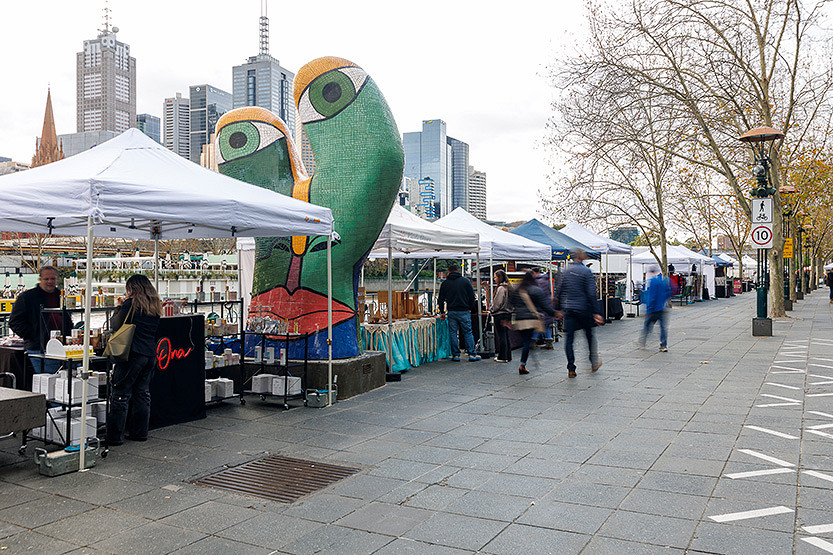
Humans of Southbank
In 2010 Brandon Stanton began a project entitled Humans of New York.
Read More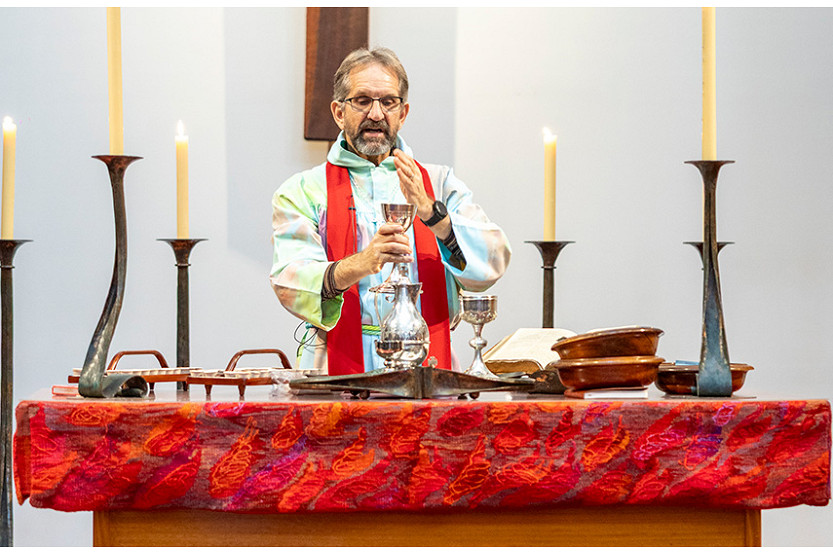
Human touch
Do you have a favourite coffee shop? What makes it your “go-to” place? My hunch is that while good quality coffee is important there are other things that encourage your loyalty.
Read More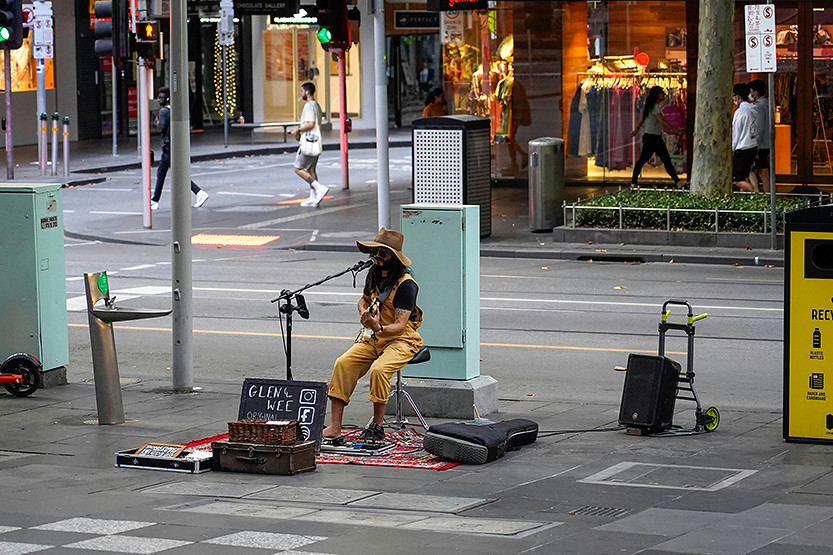
Southgate’s sights and sounds
Even as winter approaches entertaining street performers continue to charm our Southbank neighbourhood.
Read More
Sale of Hanover House signals likely end for Beulah’s STH BNK vision

Farewell Southbank News: more than a newspaper
 Download the Latest Edition