“A real opportunity”: what the proposed sale of Victoria Barracks could mean for Southbank
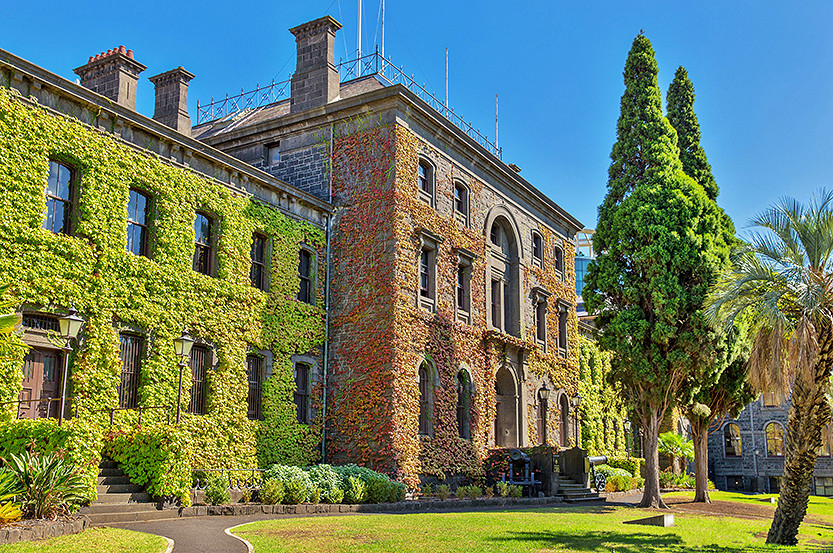

The federal government’s release of its Defence Estate Audit has placed Melbourne’s Victoria Barracks firmly in the spotlight, identifying the historic Southbank site as part of a proposed divestment of more than 60 Defence properties nationwide.
While the announcement has been framed in Canberra as a necessary reform to modernise an ageing and underutilised estate, the implications in Southbank are far more local, raising profound questions about heritage, open space, housing pressure and what this part of Melbourne might become.
Occupying a vast footprint fronting St Kilda Rd and bounded by Wadey, Wells and Coventry streets, Victoria Barracks is one of the largest remaining “closed” precincts in inner Melbourne. Its bluestone buildings are among the city’s most significant military heritage assets, yet much of the site is characterised by low-intensity uses, including expansive surface car parking along the Wells St edge that backs onto Southbank Village.
That neighbourhood is a low-rise special character area under Melbourne’s planning scheme, prized by residents for its human scale but increasingly hemmed in by high-density development elsewhere in the suburb.
Nationally, the Albanese Government says the Defence Estate Audit responds to decades of deferred decisions and a legacy footprint that no longer aligns with contemporary capability needs. Deputy Prime Minister and Defence Minister Richard Marles has described the reforms as unavoidable, arguing that Defence cannot continue to maintain sites that are vacant or underused while facing the most challenging strategic environment in generations. He has stressed that proceeds from any sales will remain within the Defence portfolio and be reinvested in national security priorities, including the strengthening of northern bases.
Those arguments have been echoed by Finance Minister Katy Gallagher, who says the Department of Finance will oversee divestments to ensure sites are sold at market value with proper consideration of remediation, heritage and community impacts. The government insists it has taken time to assess consequences for personnel and communities and has committed to preserving public access to historically significant places where possible.
The Coalition, however, has seized on the audit to accuse Labor of conducting a “fire sale” of Defence assets. Shadow Defence Minister Angus Taylor has warned that divestments must not undermine capability or workforce readiness, while Senator James Paterson has argued that sales should only proceed if they demonstrably improve the Commonwealth’s bottom line after all transition and remediation costs. Shadow Housing Minister Andrew Bragg has also questioned whether land disposals will translate into real housing outcomes, calling for firm timelines and safeguards against land banking. These national arguments will inevitably play out in the background as decisions on individual sites, including Victoria Barracks, move closer.
For Southbank, however, the conversation is less about Defence budgets and more about whether this moment can be harnessed as a once-in-a-generation opportunity to reshape a critical part of the suburb with the community’s needs in mind.
Importantly, Victoria Barracks has not emerged from the audit in a policy vacuum. More than a decade ago, the site was explicitly contemplated as part of the future of Southbank in the Melbourne Arts Precinct Blueprint, initiated under the Baillieu Government in 2011 and released in 2014. That blueprint identified the barracks as a potential extension of the arts and civic spine of St Kilda Rd, foreshadowing adaptive reuse of heritage buildings and the opening up of the grounds for markets, festivals, pedestrian connections and cultural activity, while preserving the site’s historic fabric. The vision was not prescriptive, but it firmly positioned the barracks as a place that could one day shift from closed institutional use to public-facing civic life.
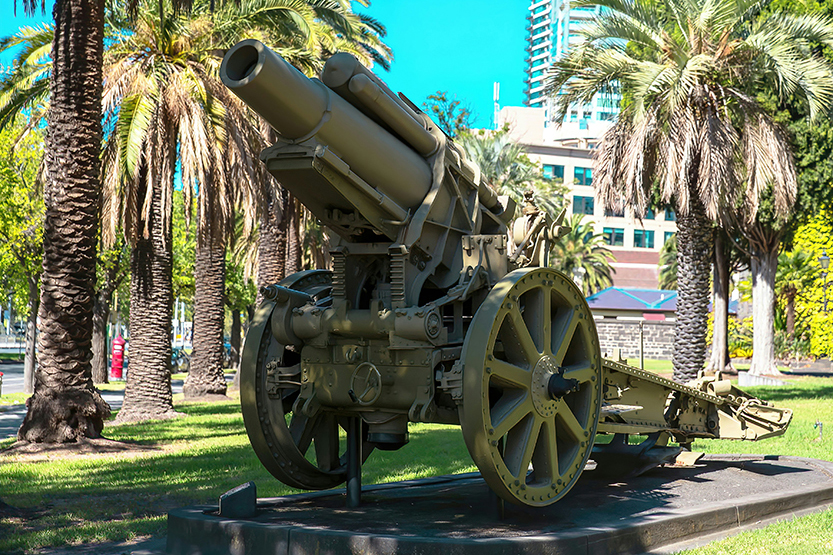
Architect Yvonne von Hartel, who was appointed by former premier Ted Baillieu to chair the Arts Precinct Working Group, told Southbank News that the starting point for any future of the barracks must remain its heritage significance.
Ms von Hartel, who still lives in Southbank, says the historic buildings along St Kilda Rd “deserve on every level to be preserved” and, crucially, preserved with generous space around them so they can be properly celebrated rather than crowded by new development.
In her view, the scale and prominence of Victoria Barracks demands a bespoke approach rather than a generic planning response. She argues that the site should be treated as a special precinct with its own planning controls, allowing careful consideration of height, massing and land use across different edges of the site. That includes sensitivity to Southbank Village on the Wells St side, the Melburnian tower on Wadey St, and the broader Shrine and St Kilda Rd context.
Beyond heritage, Ms von Hartel points to something Southbank has long lacked: meaningful, usable community infrastructure. While the suburb has access to major parklands across St Kilda Rd, she argues that residents need more active and engaging spaces close to home.
She suggests the barracks could accommodate proper walking and exercise circuits, playgrounds and courts, and other facilities that support daily life in Australia’s most densely populated postcode. For Ms von Hartel, these elements are not optional extras but essential to ensuring any redevelopment genuinely contributes to the neighbourhood.
That sentiment is shared by Southbank Residents’ Association president Tony Penna, who says the association is approaching the proposed sale as “a real opportunity” rather than something to oppose outright.
Mr Penna acknowledges the federal government’s rationale for consolidating its land holdings but insists that heritage protection must be front and centre in any future plans. He also emphasises that, at present, the barracks is largely inaccessible, meaning its heritage is effectively locked away from the public.
Opening up the site, even partially, could allow residents and visitors to appreciate a place that has shaped Melbourne’s history for more than a century, aligning closely with the civic and cultural aspirations articulated in earlier planning work for the precinct.
At the same time, Mr Penna cautions against alarmism, noting that it is still early days. He says the real risk lies in allowing market forces to dictate outcomes without clear planning frameworks and community input. In a precinct as sensitive as Southbank, where low-rise neighbourhoods sit beside major institutions and infrastructure, poorly conceived development could easily erode the very qualities that make the area distinctive.
The audit’s release has also revived debate about housing, with the government and some commentators floating affordable housing as a potential outcome on surplus Defence land. Locally, there is scepticism about how viable that would be on such high-value inner-city land, particularly once remediation and heritage costs are factored in.
Both Ms von Hartel and Mr Penna argue that if housing is part of the mix, it must deliver to a genuine cross-section of the community rather than skewing entirely to one end of the market. Von Hartel notes that the site is large enough to form a community in its own right and should be planned accordingly, rather than treated as a simple windfall for maximising yield.
ANVAM and the unresolved future of 310 St Kilda Rd
One of the most sensitive subplots in the Victoria Barracks story is the fate of 310 St Kilda Rd, the former Repatriation Clinic that sits within the barracks’ footprint but is treated as a separate asset under the Defence Estate Audit.
The building has been vacant for decades and has long been the focus of advocacy by the Australian National Veterans Arts Museum (ANVAM), which wants to transform it into a gallery and cultural hub supporting veteran wellbeing.
ANVAM director Mark Johnston has been sharply critical of Defence’s handling of the site, arguing that government rhetoric about preserving heritage and supporting veterans has not been matched by action. While Mr Johnston spoke to Southbank News about a range of Defence workforce and capability issues, his core concern locally is that a sale to private interests could permanently foreclose the possibility of a public-facing veteran arts and wellbeing facility.
For Southbank, the outcome at 310 St Kilda Rd is widely seen as a litmus test for how seriously the Commonwealth is prepared to engage with community aspirations as it divests sensitive sites.
Taken together, the proposed divestment of Victoria Barracks and 310 St Kilda Rd represents a pivotal moment for Southbank. The site’s scale means it could reshape the suburb’s physical and social fabric for generations, either by opening up heritage and delivering long-sought community infrastructure, or by becoming another example of missed opportunity in a neighbourhood already grappling with density and liveability pressures.
As Ms von Hartel puts it, the worst outcomes are not inevitable. But avoiding them will require governments to set clear expectations, establish appropriate planning controls, and engage meaningfully with the community before the market does the thinking for them.
In that sense, the Defence Estate Audit has not just triggered a property process, but a conversation about what Southbank values, and how those values are reflected when public land changes hands.
In the words of Lord Mayor Nick Reece, “this is such a prized parcel of public land”.
“We need to get the right outcome,” he said.
The Lord Mayor prompted a motion at the February 17 Future Melbourne Committee meeting to investigate the opportunities that several defence sites could present for the community. This includes the Victoria Barracks site and Repatriation Clinic on St Kilda Rd, and the Carlton Training Depot.
The Lord Mayor noted that the council's draft Community Infrastructure Plan had identified that Southbank faced significant gaps in community infrastructure due to rapid growth, limited land and high density.
It identifies the need for more accessible community spaces including culturally focused facilities, recreation areas, family and youth services, and new open space.
“Victoria Barracks is one of Australia’s most important historic sites. It’s where General Douglas MacArthur and John Curtin planned the defence of our nation in World War II, and it must stay in community hands,” the Lord Mayor said.
“This is a once-in-a-generation opportunity to create a community precinct worthy of that past and worthy of Southbank’s future.”
“We will only get one chance to get this right, to open the gates, celebrate our history, restore the beautiful heritage buildings, and create new green spaces and community and arts facilities.”
“We want to work with the Federal and Victorian Governments, and private partners, to transform the site so it can serve our city for next 150 years.”
“We are not opposed to development on the site, but it needs to be done very carefully, with appropriate controls in place, we cannot afford to get this wrong.” •
Related Articles
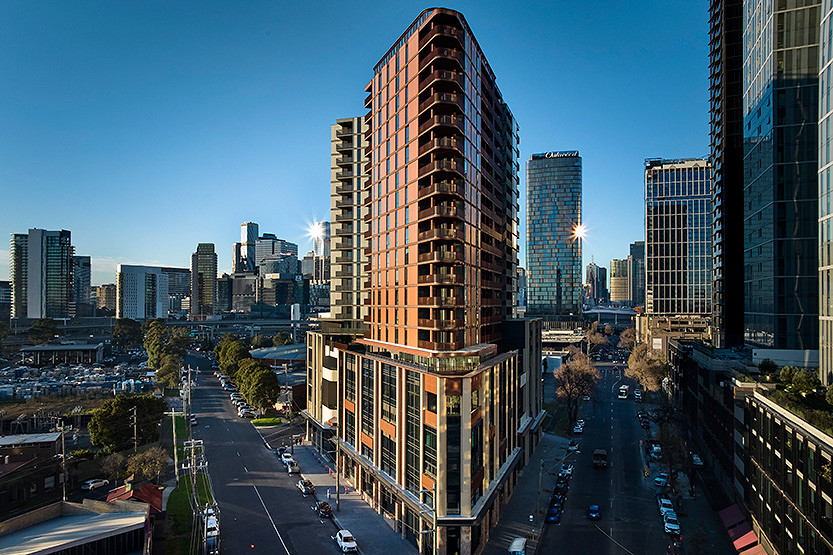
The Canopy reaches completion in growing Montague precinct
The Canopy has reached completion at 272 Normanby Rd, adding another major residential development to the fast-changing Montague precinct in Fishermans Bend.
Read More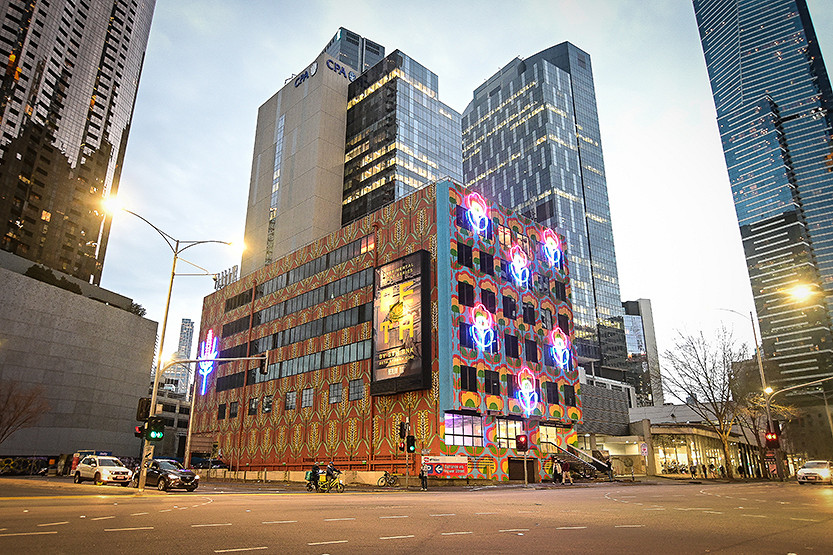
Sale of Hanover House signals likely end for Beulah’s STH BNK vision
The sale of Hanover House in Southbank appears to have all but extinguished hopes of Beulah delivering its iconic STH BNK by Beulah project in its originally approved form.
Read More
Emerald Place brings new life to South Melbourne
A new luxury residential development on the corner of Clarendon and York streets is helping reinvigorate South Melbourne’s main retail strip, close to Southbank and the CBD.
Read More
Sale of Hanover House signals likely end for Beulah’s STH BNK vision

Farewell Southbank News: more than a newspaper
 Download the Latest Edition